→ How magnetic therapy works in the body
→ Magnetic therapy for injury recovery in athletes
The Problem Athletes Face After Impact Injuries
Following a significant fall or collision, the body typically responds with:
- Deep bruising caused by pooled blood beneath the skin
- Swelling and tenderness in affected tissues
- Open wounds or abrasions in more severe cases
- Progressive colour changes as bruising evolves
In athletic settings, these responses can limit mobility, delay training, and increase the risk of further complications if recovery is prolonged.
What Is Happening Beneath the Skin
Bruising and swelling reflect underlying physiological processes:
- Blood vessels rupture, leading to pooling beneath the skin
- Inflammatory responses contribute to swelling and tenderness
- Tissue repair begins immediately but varies in speed and visibility
In this case study, changes in colour, swelling, and tissue condition were used as observable indicators of how the body was responding over time.
Magnetic therapy is not presented as a cure, but its interaction with biological systems has been observed to influence how these visible recovery processes unfold.
How Early Magnet Application Was Used
In this case, multipolar Q Magnets were applied as early as possible following the injury.

No magnet applied (early stage)
Field
Multipolar magnets create a complex magnetic field pattern, which may influence local tissue responses rather than acting as a single static field.
Dose
A single magnet was used over the primary injury site, matched to the size of the bruised area.
Placement
- Positioned directly over bruised tissue
- Secured with bandage tape
- Worn continuously, including overnight
- For open wounds, a dressing was placed between the skin and magnet (no direct contact)
This reflects a practical, real-world application approach rather than a controlled clinical protocol.
What Changed in the First Few Days

Magnet Placement and Timing
Within days of early application, several visible changes were noted:
- Faster colour transition in bruising beneath the magnet
- Reduction in swelling and tenderness
- Clear contrast between tissue under the magnet and surrounding areas
These observations suggest that timing and placement may influence how bruising progresses visually and physically.
A Detail Athletes Notice: When One Area Recovers Faster Than Another

Result after magnet use
One of the most striking aspects of this case was the visible difference between treated and untreated areas.
The tissue directly under the magnet showed:
- More rapid changes in colour
- Reduced swelling
- A distinct boundary compared to surrounding bruised tissue
For athletes, this kind of contrast is often the first practical sign that something is influencing recovery not just how it feels, but how it looks.
What Happened With Open Wounds
An additional observation was made regarding wound healing:
- The bandage beneath the magnet detached cleanly after several days
- The wound appeared pink, clean, and healthy
- Residue was found on the outside of the bandage rather than within the wound
This was not the primary focus of the case but provides insight into how different tissue types may respond under similar conditions.
What This Case Suggests
This real-world example reinforces several consistent patterns:
- Early application may influence how bruising and swelling develop
- Placement directly over the affected area appears important
- The body’s response can often be visually observed, not just felt
These are observational findings rather than controlled clinical outcomes, but they align with repeated anecdotal patterns seen in similar scenarios.
Limitations and What This Does Not Prove
It’s important to keep this in perspective:
- This is a single case study, not a controlled trial
- Individual responses may vary significantly
- Observations are based on visible changes, not internal measurements
- Mechanisms are not fully defined within this context
As with all recovery tools, outcomes depend on the nature of the injury, timing, and individual physiology.
What Athletes Can Take From This
For athletes managing bruising and impact injuries:
- Timing matters early intervention may influence outcomes
- Placement matters targeting the affected tissue directly is key
- Consistency matters continuous application was used in this case
If you’re exploring recovery strategies:
→ Learn how to apply magnets correctly: Field | Dose | Placement guide
→ Explore injury-specific applications: Magnetic therapy for bruising and soft tissue injuries
→ Understand recovery patterns: Athlete recovery and inflammation management
Early Magnet Application After Trauma — Key Points
- Apply as soon as possible after injury
- Place directly over bruised or affected tissue
- Use a barrier for open wounds (no direct contact)
- Keep application consistent (including overnight)
- Look for visible changes in bruising, swelling, and tissue condition
Frequently Asked Questions
1. How do I apply the Q Magnet device?
Q Magnets can be applied using sports tape such as Fixomull, Hyperfix, or Cover-Roll, double-sided adhesive patches such as QFix28, QFix6 plasters for smaller models, braces, elastic supports, bandages, headbands, or the Flux Attachment Plate for suitable clothing applications.
The key is to hold the magnet securely in the correct position. Q Magnets depend on accurate placement, and even a small shift may change the field exposure at the target area.
See How To Use Q Magnets.
For longer use, many people prefer a brace, wrap, elastic support, or clothing-based attachment method rather than repeated taping. For sport or movement, make sure the magnet cannot slip, detach, or attach unexpectedly to metal equipment.
Always apply the magnet with the correct side facing the body and the orientation arrow aligned as directed.
2. How do I know which Q Magnet to use?
Choosing the right Q Magnet depends on the target area, tissue depth, magnet size, polarity pattern, and placement goal. This is the practical role of Field | Dose | Placement: The field design, exposure dose, and anatomical placement all need to work together.
Q Magnets come in different sizes, strengths, thicknesses, and polarity arrangements, including quadrupolar, hexapolar, octapolar, and other multipolar configurations. In general, smaller magnets are often used for more superficial or precise applications, while larger or thicker models may be used where deeper penetration or broader exposure is needed.
A useful way to learn the range is to review the Device Selection information and the Products page, especially the individual magnet descriptions, sizes, and penetration depth guidance. Strongest is not always best. The right magnet is the one whose field and dose best match the target tissue.
For first-time users, the Body Map on the How to Use Q Magnets page is often the easiest starting point. It provides recommended magnets, placements, and application protocols based on Q Magnets’ research, clinical experience, acupuncture principles, and physiotherapy reasoning.
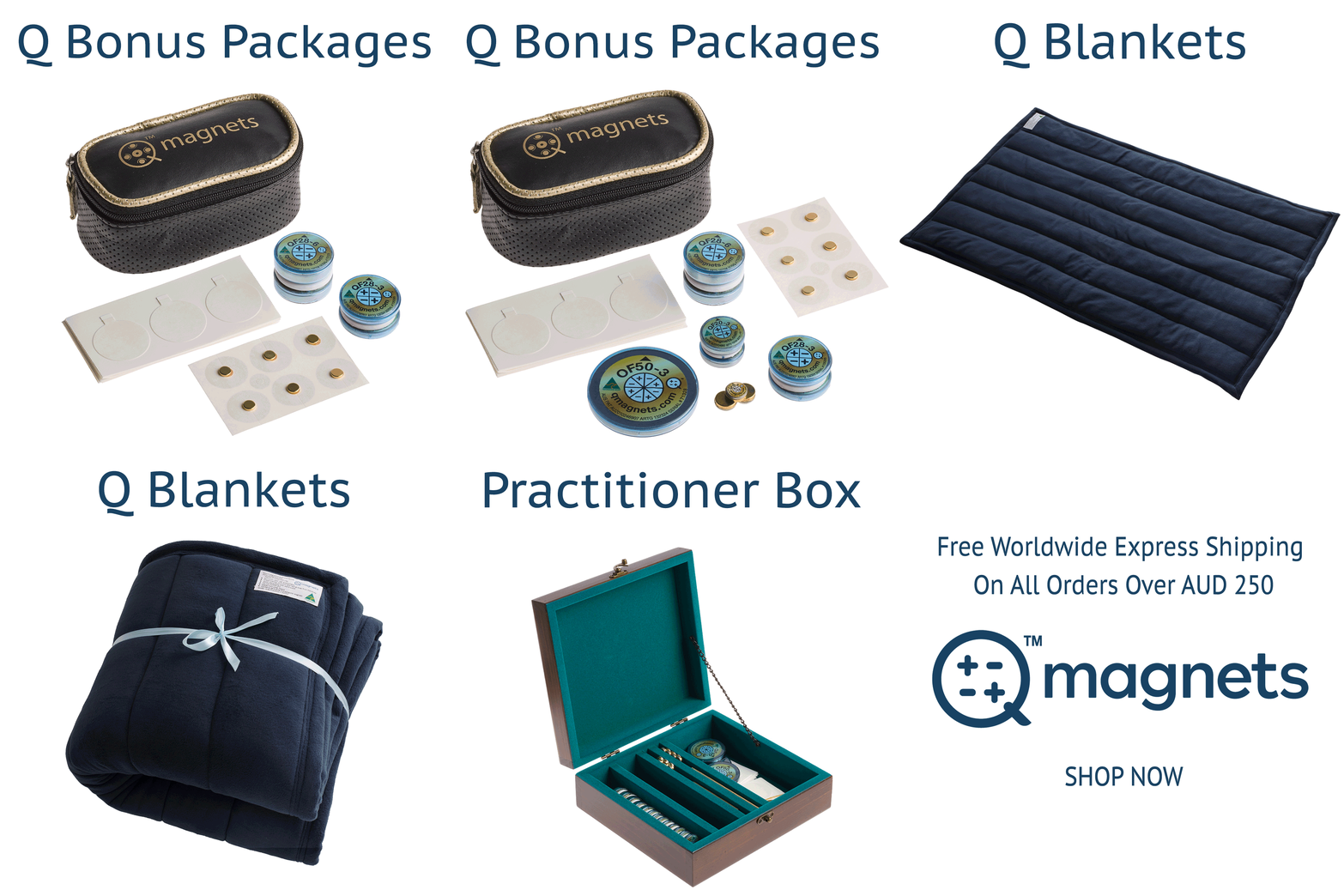
The Q Bonus Packages are also a practical first option because they include a variety of magnets suitable for small joints, large joints, and acupoint-style placements. Q Blankets may be a good choice for those looking for a comfortable sleep-time or rest-time static magnetic field environment, either as a throw-over blanket or used like a magnetic mattress pad.
3. Since placement of Q Magnets is critical, how does one find the specific placement?
The simplest starting point is to place the Q Magnet over the area of tenderness. This may be suitable for local pain patterns such as a tender tendon, joint, muscle area, or minor localized injury.
However, placement is not always obvious. Pain may be referred from another area, influenced by nerve pathways, or related to spinal segments, acupressure points, or sensitized neural structures. In these cases, multiple Q Magnets may be used along relevant nerve pathways or related anatomical regions.
This is where Field | Dose | Placement becomes practical. The field must be appropriate for the target, the magnet size and exposure must match the depth and tissue, and the placement must be accurate enough to expose the intended area to the field gradient.
For example, a local sting or tennis elbow tenderness may respond best to direct placement over tender spots. A radiating nerve pattern may require placement closer to the relevant spinal level or nerve pathway. Acupressure-style placements may also be used in some protocols.
For most users, the Body Map is the best starting point because it gives recommended placements and magnet combinations. More complex pain syndromes may require guidance from a practitioner with knowledge of anatomy, neurology, physiotherapy, or acupuncture-style point selection.