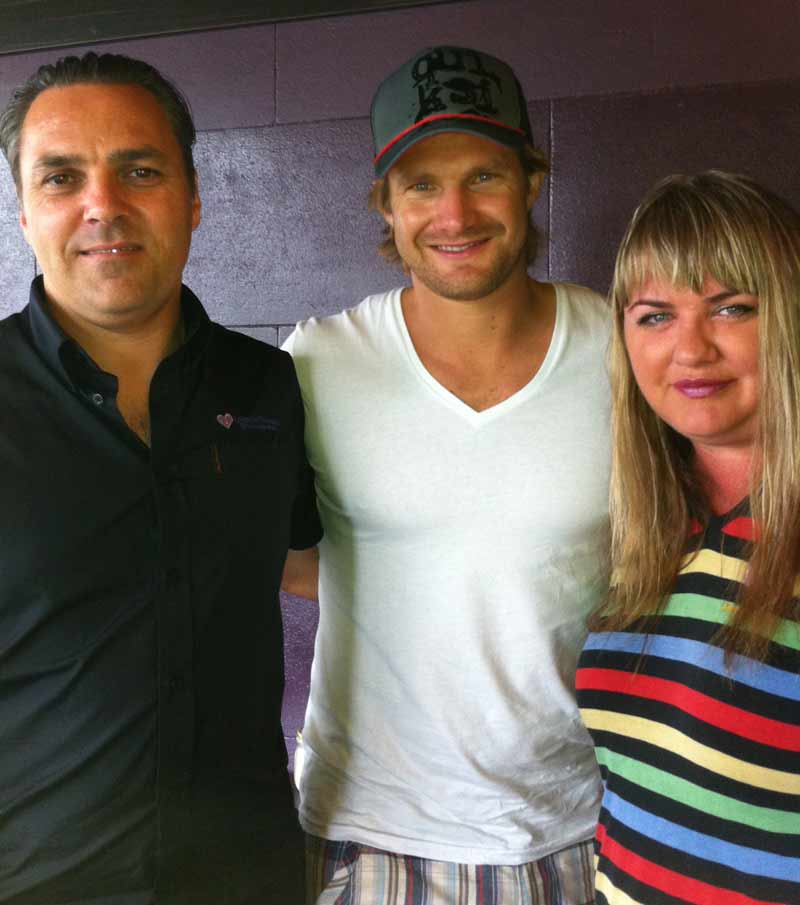
Shane Watson with Q Magnets inventors, James & Dianne Hermans
Australian cricketer Shane Watson incorporated Q Magnets as part of his broader recovery strategy during his professional career. According to his original testimonial, he used Q Magnets to help manage lower back discomfort during long-haul travel and to support recovery from the bumps, bruises, and physical demands that come with elite cricket.
Like many professional athletes, Watson’s recovery approach combined multiple strategies rather than relying on a single intervention. Q Magnets were used alongside normal sports medicine practices, rehabilitation, and guidance from experienced health professionals.
If you would like to learn more about the broader principles of timing, placement, and practical application, see our guide to magnetic therapy for sports injury recovery. You can also explore additional sports recovery testimonials from athletes and practitioners who have incorporated Q Magnets into their recovery routines.
The Physical Demands of Elite Cricket
Professional cricket places sustained demands on the body that extend well beyond match day.
Fast bowlers, batters, and fielders are exposed to repetitive loading, high training volumes, frequent travel, impact injuries, and extended periods of competition. Long-haul flights, compressed schedules, and limited recovery time can all contribute to ongoing physical stress.
Lower back discomfort is particularly common in elite cricket because of repeated rotational forces, bowling loads, prolonged sitting during travel, and cumulative training demands. Bruises, corks, and other soft tissue injuries are also an unavoidable part of the game.
Maintaining comfort while continuing to train and compete often requires a comprehensive recovery plan that combines appropriate rehabilitation, load management, and practical recovery strategies.
How Q Magnets May Complement Sports Recovery
Q Magnets are best viewed as one component of a broader recovery program rather than a standalone solution.
Within the Q Magnets approach, static magnetic field therapy is used as a local, non-powered intervention that may complement standard rehabilitation and recovery practices. Proposed mechanisms discussed throughout the Q Magnets educational resources include potential effects on pain signalling, ion channel behaviour, inflammatory processes, and local physiological responses. These mechanisms continue to be researched, and individual responses may vary.
Rather than replacing physiotherapy, medical assessment, exercise rehabilitation, or appropriate sports medicine care, Q Magnets are intended to work alongside these established approaches.
For athletes managing fresh bruises, strains, minor sprains, or ongoing lower back discomfort, early application and accurate placement are considered important practical principles.
Many sports injuries begin with a relatively small area of tissue irritation before secondary changes develop over time.
How Shane Watson Used Q Magnets
According to the original testimonial, Shane Watson had already experienced positive results using Q Magnets to help manage lower back discomfort during long-haul flights.
Sports physiotherapist Victor Popov later encouraged him to incorporate Q Magnets while working through injuries that had been slow to respond to conventional management. Their discussions also included practical application for bruising, reflecting the reality that elite cricket commonly involves both impact injuries and repetitive strain.
This illustrates a practical principle that appears throughout the Q Magnets system: successful application depends not only on wearing a magnet, but on selecting an appropriate device and positioning it accurately over the target tissue.
Field, Dose, and Placement all contribute to the overall application strategy.
For lower back discomfort, magnets are positioned over specific anatomical landmarks rather than placed generally across the lumbar region. Likewise, bruises and soft tissue contusions are treated by placing the appropriate magnet directly over the affected area as soon as practical, while continuing with normal sports medicine care and rehabilitation.
What This Case Suggests for Athletes
The Shane Watson case highlights two situations familiar to many athletes.
The first is the challenge of managing lower back discomfort associated with extensive travel, prolonged sitting, and the cumulative demands of elite sport. The second is recovering from acute impact injuries such as bruises and corks that can interfere with training and performance if not managed well.
Although every injury is different, this case reflects a consistent pattern seen across many Q Magnets sports recovery testimonials. Athletes and practitioners often report the best experiences when Q Magnets are:
- applied as early as practical after an injury
- positioned directly over the affected tissue
- selected appropriately for the size and depth of the target area
- used alongside rehabilitation, progressive loading, and appropriate medical care
These practical principles align with the Field | Dose | Placement framework, which emphasises that accurate application is just as important as the magnet itself.
Whether the goal is supporting recovery from a corked thigh, easing travel-related lower back discomfort, or assisting recovery between training sessions, Q Magnets are intended to complement an athlete’s overall recovery strategy rather than replace established treatment approaches.
A Balanced View of One Athlete’s Experience
Practical Next Steps
If you are recovering from a sports injury, managing recurring lower back discomfort during travel, or dealing with bruising from training or competition, it helps to keep your recovery approach simple and consistent.
Begin by identifying the injured tissue, selecting an appropriate Q Magnet, and positioning it accurately over the target area using the Field | Dose | Placement principles. Continue to follow your rehabilitation program, manage training loads appropriately, and seek professional assessment whenever symptoms persist or worsen.
If your primary concern is a recent sporting injury, our Magnetic Therapy for Sports Injury Recovery guide explains practical application strategies for common sporting injuries.
If lower back discomfort is your main issue, the Lower Back Pain Treatment Guide provides detailed placement recommendations.
For a deeper understanding of why magnet selection and positioning matter, explore Field | Dose | Placement, which explains how field characteristics, treatment dose, and anatomical placement work together within the Q Magnets system.
Finally, if you would like to compare Shane Watson’s experience with those of other elite athletes, browse our collection of sports recovery testimonials, featuring athletes from cricket, rugby, AFL, MMA, motorsport, and other high-performance sports.
Shane Watson has long been recognised as a thoughtful leader both on and off the cricket field. His Lessons Learnt With The Greats podcast explores leadership, resilience, performance, and personal development through conversations with some of the world’s most accomplished athletes and business leaders.