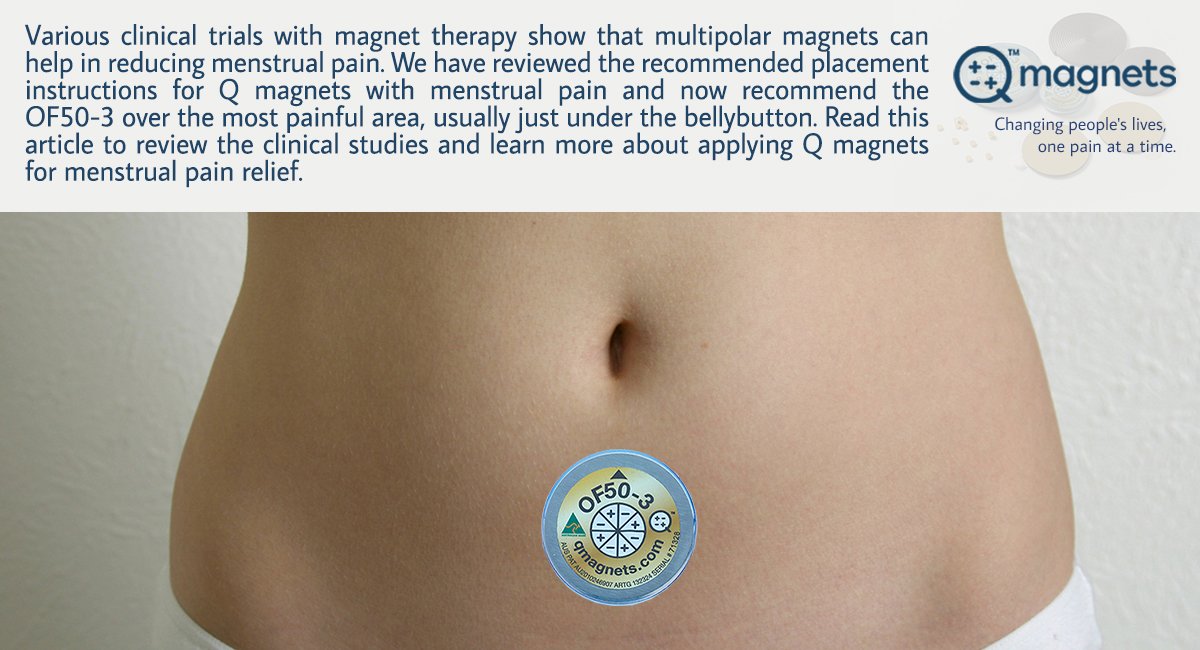
Abdominal and Menstrual Pain Treatment with Magnetic Therapy
Magnetic Therapy for Abdominal and Menstrual Pain
Abdominal pain can mean many different things.
For one person, it may be temporary digestive discomfort. For another, it may be the familiar cramping that accompanies menstruation. It can also arise from muscular tension, referred pain, surgery, irritation of abdominal structures or a medical condition that requires professional assessment.
That variety is precisely why abdominal pain should never be treated as a single diagnosis.
Magnetic therapy for abdominal pain is best considered as a possible form of temporary, localized comfort support not as a way to diagnose an unexplained symptom or treat its underlying cause. Q Magnets are passive, non-powered medical devices intended to produce a localized static magnetic field over a superficial body site and potentially provide temporary relief from minor aches and pains.
For readers who already understand the cause of their discomfort and are exploring a non-invasive, drug-free adjunct, precision multipolar medical magnets may be worthy of consideration.
Detailed application instructions belong in the separate Abdominal and Menstrual Pain Treatment Protocol. This guide explains the condition, the scientific rationale, the evidence, the limitations and the principles that should inform responsible use.
Why Abdominal Pain Requires More Caution Than Many Other Pain Conditions
The abdomen contains multiple organs, muscles, connective tissues, nerves and blood vessels within a relatively compact area. Pain felt in one location does not always originate directly beneath that point.
Possible causes include:
- intestinal gas or indigestion
- constipation
- gastroenteritis or food poisoning
- menstrual cramping
- abdominal-wall muscle strain
- irritable bowel syndrome
- urinary or kidney conditions
- gallbladder problems
- appendicitis
- reproductive or pelvic conditions
- referred pain from the spine
- post-surgical irritation or scar sensitivity
Some causes are minor and self-limiting. Others can become urgent.
This makes the first question more important than the therapy itself:
Do you reasonably understand what is causing the pain?
A magnetic device should not be used to delay assessment of new, severe, worsening or unexplained abdominal symptoms.
When abdominal pain needs medical attention
Seek prompt medical advice when pain is:
- severe, sudden or progressively worsening
- accompanied by fever, persistent vomiting or fainting
- associated with a rigid, swollen or highly tender abdomen
- accompanied by blood in vomit, urine or stools
- associated with unusual vaginal bleeding
- present during a known or possible pregnancy
- accompanied by chest pain or shortness of breath
- persistent despite appropriate self-care
- significantly different from your normal menstrual symptoms
The purpose of this guidance is not to create alarm. It is to preserve the correct order of care: assess potentially serious causes first, then consider adjunctive comfort measures where appropriate.
Real Customer Experiences with Q Magnets for Abdominal and Menstrual Pain
Finding Comfort from Menstrual Pain with Q Magnets
One customer shared her experience using Q Magnets for pain associated with her menstrual cycle. She reported that the magnets were helpful when menstrual discomfort occurred. According to her testimonial, the experience contributed to her overall satisfaction with the product. She was also exploring another form of pain management at the time. As her discomfort became easier to manage, she found that she did not need to use the magnets as frequently as before. She viewed the reduced need for regular pain support as a positive development. Her story reflects a personal experience rather than a guaranteed result for every user. Individual responses to magnetic therapy may vary depending on the person and the source of their discomfort.
Managing Chronic Gastrointestinal Pain with the OF50-3 Magnet
Relief from gastrointensital (GI) pain by applying OF50-3 magnet on solar plexus chakra
A retired registered nurse shared a detailed account of using the OF50-3 magnet as part of her routine for chronic gastrointestinal discomfort. She combined the magnet with deep breathing, meditation, self-acupressure, chamomile tea and gentle exercise. Each morning, she placed the magnet over the solar plexus area while focusing on relaxation and visualising wellness. She reported that relief often began after approximately 15 minutes of using this routine. When discomfort remained in a specific area, she placed the magnet directly over that location. Over time, she felt that her symptoms became more manageable and that she had greater energy. She emphasised that the magnet was not a cure and that consistent daily use was important in her personal experience. Her story demonstrates how she incorporated Q Magnets into a broader self-care approach alongside conventional and complementary practices.
Menstrual Pain Is Common, but It Should Not Always Be Normalized
Menstrual pain, medically known as dysmenorrhea, often presents as cramping in the lower abdomen or pelvis. It may also be accompanied by lower-back discomfort, aching into the thighs, fatigue, nausea, bowel changes or headaches.
Mild cramping can occur as the uterus contracts during menstruation. However, pain that repeatedly disrupts work, sleep, exercise, school or normal daily activity deserves proper attention.
Menstrual pain may be described as:
- primary dysmenorrhea, where painful periods occur without an identified pelvic disease
- secondary dysmenorrhea, where pain may be associated with a condition such as endometriosis, adenomyosis, fibroids, pelvic inflammatory disease or another reproductive health issue
This distinction matters. A device that may provide temporary comfort does not identify why severe menstrual pain is occurring.
Persistent or increasing period pain, pain between periods, pain during intercourse, unusually heavy bleeding or a major change in symptoms should be discussed with a qualified healthcare professional.
Placement should follow the suspected pain pathway, not merely the place where pain is felt.
How Might Multipolar Magnetic Fields Influence Pain?
The precise biological mechanisms of static magnetic field therapy remain under investigation. It would be inappropriate to claim that magnets have been proven to “heal” abdominal conditions, correct hormonal disorders or treat gastrointestinal disease.
The more defensible scientific discussion relates to nervous system activity and membrane excitability.
Laboratory investigations using steep static magnetic field gradients have reported reversible changes in sustained sensory-neuron firing under experimental conditions. These observations have contributed to the hypothesis that localized magnetic field gradients may influence neuronal excitability, possibly through changes involving cell-membrane behaviour and ion movement.
That does not establish a complete clinical mechanism for menstrual or abdominal pain. It does, however, provide a plausible framework for studying temporary pain modulation.
Q Magnets are therefore best positioned as a form of field-based neuromodulation support rather than as devices that cure the source of abdominal pain.
They may be considered for temporary localized comfort while preserving movement, alertness and normal daily function.
Pain is more than tissue damage alone
What Does the Research Say About Magnets and Menstrual Pain?
Research into static magnetic fields and menstrual pain is still limited. Some small clinical studies have reported reductions in dysmenorrhea symptoms when static magnetic devices were applied over the pelvic region.
The protocol source refers to a randomized clinical trial involving a static magnet applied to the pelvic area for menstrual pain. It also points to later research exploring static magnetic field exposure and physiological pathways associated with dysmenorrhea.
These findings are encouraging enough to justify further investigation, but they should be interpreted carefully.
Important limitations may include:
- small participant numbers
- differing magnet designs
- inconsistent field strengths and gradients
- varying treatment durations
- differences in placement
- challenges with credible placebo devices
- limited independent replication
- reliance on self-reported pain outcomes
A study involving one magnetic configuration cannot automatically validate every commercial magnetic product.
Research results should therefore be understood within the conditions actually studied: device design, field characteristics, placement, exposure and participant group.
Why Generic “Magnet Strength” Is an Incomplete Measure
Magnetic products are often marketed using a single gauss figure. This can be misleading.
A surface measurement does not fully describe the magnetic environment experienced by tissue. It does not explain how quickly the field changes across space, how deeply it extends, how poles are arranged or whether the target region is adequately covered.
For abdominal and pelvic applications, several variables matter:
- the surface area being addressed
- the depth of the intended target
- the number of devices used
- separation between devices
- exact positioning
- length of exposure
- comfort during movement and sleep
- whether symptoms are local or referred
This is why Q Magnets education emphasizes Field | Dose | Placement rather than “the strongest magnet wins.”
Applying Field | Dose | Placement to Abdominal and Menstrual Discomfort

If you’re ready for practical application, follow our Abdominal and Menstrual Pain Treatment Protocol for detailed magnet placement and product recommendations.
Field: What kind of magnetic environment is created?
The Field component includes the device’s polarity pattern, dimensions, profile and localized field gradients.
Q Magnets use multiple alternating poles rather than relying solely on a basic north-south arrangement. These engineered configurations are intended to create localized spatial variation across the application area.
For abdominal or pelvic discomfort, the selected field should be appropriate for:
- the size of the region
- the suspected depth of the target
- whether the discomfort is focal or widespread
- whether associated lower-back symptoms are present
This is one reason different Q Magnet models should not be treated as interchangeable.
Dose: More than field strength
With static field therapy, Dose includes:
- magnet size
- magnetic profile
- tissue depth
- exposure duration
- continuity of use
- cumulative exposure
- the number of devices
- individual sensitivity
A larger or thicker magnet is not automatically better.
The appropriate dose is the lowest practical exposure that provides useful comfort without causing unwanted effects or making the application difficult to tolerate.
Users should inspect the skin regularly and follow the current Instructions for Use regarding wear time, adhesive care and reapplication.
Placement: Anatomy determines exposure
Placement is especially important around the abdomen because potential sources of pain differ considerably.
The appropriate application may relate to:
- the lower abdominal wall
- the pelvic region
- a focal area of muscular discomfort
- an area of post-surgical sensitivity
- associated lower-back structures
- a broader pattern requiring several devices
The Primary Page should not attempt to provide a one-size-fits-all diagram. Readers seeking practical instructions should use the dedicated step-by-step magnet placement guide.
Correct placement also means maintaining sufficient separation between multiple Q Magnets so their fields do not interfere unintentionally.
Could Magnetic Therapy Help Stomach Ache or Digestive Pain?
“Stomach ache” is a broad everyday term. It may refer to the stomach itself, the intestines, the abdominal muscles, the gallbladder, the urinary system or even referred pain from another region.
Static field therapy should not be described as a treatment for digestive disease.
Where a person has already been medically assessed and the discomfort is considered minor or recurrent, Q Magnets may be explored as temporary comfort support. Any improvement should be regarded as an individual observation rather than evidence that the underlying digestive problem has been resolved.
The protocol page references a customer account from a retired registered nurse who described using an OF50-3 magnet in connection with gastrointestinal discomfort. This story may be suitable as a customer-experience resource, but it should be presented as a personal report not as proof of effectiveness or a standard placement recommendation.
That distinction protects both scientific credibility and user safety.
Can Q Magnets Be Used for Post-Surgical Abdominal Discomfort?
Post-surgical discomfort requires additional care.
Q Magnets should not be placed over an open wound. They may be considered over a dressing only where this is consistent with medical advice and the Instructions for Use. A person should also confirm that no implanted or programmable medical device is present near the proposed application area.
Persistent pain after surgery may relate to:
- normal tissue healing
- scar sensitivity
- nerve irritation
- muscular guarding
- altered movement
- infection
- hernia
- adhesions
- another complication
A clinician should assess unexpected, worsening or persistent post-operative symptoms.
Once healing is established and serious complications have been excluded, static field therapy may be explored as a non-invasive adjunct for localized temporary comfort. The goal remains symptom support not acceleration of surgical healing or treatment of scar tissue itself.
Safety, Contraindications and Pregnancy
Q Magnets should be used in accordance with the current product Instructions for Use.
Do not use them near magnetically sensitive or programmable medical devices, including:
- pacemakers
- implantable cardioverter-defibrillators
- infusion pumps
- dorsal column stimulators
- other magnetically programmable implants
Do not place Q Magnets:
- over transdermal medication patches
- directly over an open wound
- beneath a heat pack
- where a doctor has advised against magnetic-device use
The safety of Q Magnets during pregnancy has not been established. Anyone who is pregnant, could be pregnant or is attempting to address pregnancy-related abdominal pain should consult a qualified healthcare professional before use.
Because abdominal symptoms can occasionally indicate urgent conditions, Q Magnets should never be used to postpone appropriate medical assessment.
Read the complete Q Magnets contraindications and safety guidance before application.
What Results Should a User Realistically Expect?
Responses to static magnetic field therapy vary.
Some Q Magnets users report a noticeable change in comfort relatively quickly. Others describe a gradual effect, an inconsistent response or no meaningful difference.
Possible reasons for variation include:
- inaccurate placement
- movement of the device
- inappropriate magnet size
- insufficient target coverage
- tissue depth
- the source of the pain
- individual sensitivity
- duration of wear
- an underlying condition not suited to self-treatment
A lack of response should not automatically lead to using progressively stronger magnets. It should prompt a review of the pain source, placement, device selection and whether professional assessment is needed.
Likewise, temporary symptom relief should not be assumed to mean the underlying condition has resolved.
Choosing Q Magnets for Abdominal or Menstrual Applications
Product choice should follow the protocol rather than precede it.
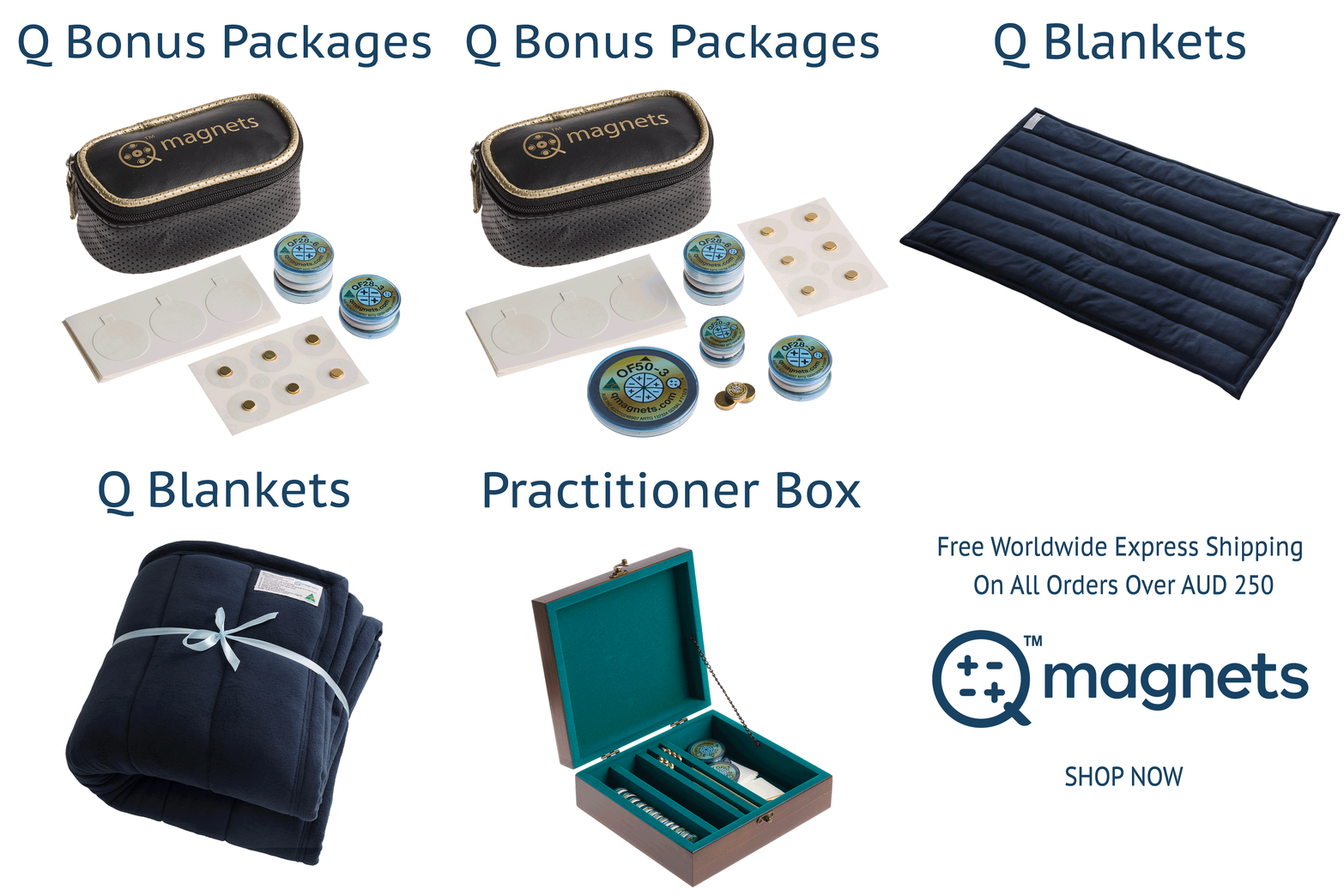
The original abdominal and menstrual pain resource includes several multi-magnet combinations using models such as the QF20-3, QF28-3 and QF28-6. These options reflect differing field profiles and coverage requirements rather than simple price tiers.
Before purchasing, consider:
- whether the pain has been appropriately assessed
- whether it is localized or widespread
- whether lower-back discomfort is also present
- how many application points are involved
- whether deeper or broader coverage may be required
- whether the devices can be worn comfortably
- whether assistance is needed for accurate placement