Why Recovery Support Matters in High-Performance Sport
In high-impact sports, repeated physical stress can affect muscle and tissue function. Magnetic therapy fields have been observed in biological systems, including nerves and muscles, suggesting a relationship between electrical activity and magnetic signals in the body .
How Q Magnets Are Used in Practice
Within team environments like the Queensland Reds, Q Magnets are applied as a practical recovery tool alongside existing protocols, supporting athletes during periods of load, impact, and fatigue. This approach aligns with broader use of magnetic therapy for sports injury recovery.
When Every Session Counts: Small Edges in Recovery
Even small improvements in recovery routines can be valuable across a long season. The Queensland Reds’ experience reflects a consistent pattern: integrating simple, repeatable tools into daily athlete management.


Practical Use
- Applied during recovery periods
- Used alongside standard physiotherapy
- Integrated into daily routines
- Focused on high-load body areas
Frequently Asked Questions
1. How do Q Magnets work?
Q Magnets are designed to create localized static magnetic field gradients using multipolar magnet geometry. Unlike simple bipolar magnets, Q Magnets use alternating poles within one device to produce a more complex field pattern.
The proposed biological effect is not based simply on magnet strength. Instead, Q Magnets are positioned through Field | Dose | Placement:
Field: multipolar geometry and localized gradients.
Dose: magnet size, field strength, tissue depth, exposure time, and cumulative use.
Placement: accurate positioning over or near the relevant nerve, joint, soft tissue, acupressure point, or referral pathway.
Research and theoretical work suggest that steep static magnetic field gradients may influence neuronal membrane excitability and ion channel behaviour. This may help explain why correct placement and model selection are so important.
Q Magnets should therefore be understood as precision field-based recovery tools rather than general-purpose magnets.
2. How do I know which Q Magnet to use?
Choosing the right Q Magnet depends on the target area, tissue depth, magnet size, polarity pattern, and placement goal. This is the practical role of Field | Dose | Placement: The field design, exposure dose, and anatomical placement all need to work together.
Q Magnets come in different sizes, strengths, thicknesses, and polarity arrangements, including quadrupolar, hexapolar, octapolar, and other multipolar configurations. In general, smaller magnets are often used for more superficial or precise applications, while larger or thicker models may be used where deeper penetration or broader exposure is needed.
A useful way to learn the range is to review the Device Selection information and the Products page, especially the individual magnet descriptions, sizes, and penetration depth guidance. Strongest is not always best. The right magnet is the one whose field and dose best match the target tissue.
For first-time users, the Body Map on the How to Use Q Magnets page is often the easiest starting point. It provides recommended magnets, placements, and application protocols based on Q Magnets’ research, clinical experience, acupuncture principles, and physiotherapy reasoning.
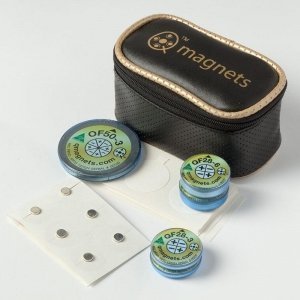
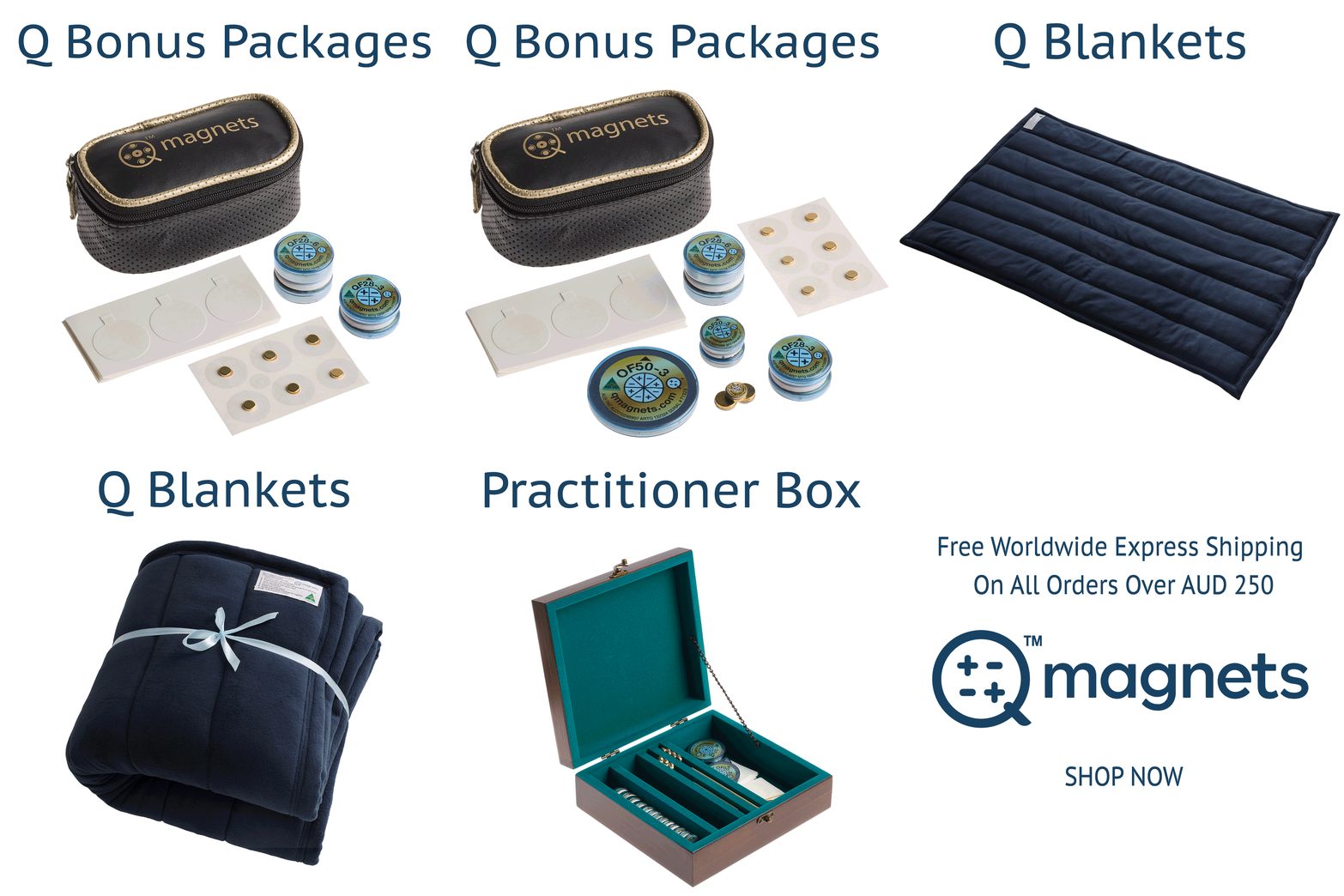
The Q Bonus Packages are also a practical first option because they include a variety of magnets suitable for small joints, large joints, and acupoint-style placements. Q Blankets may be a good choice for those looking for a comfortable sleep-time or rest-time static magnetic field environment, either as a throw-over blanket or used like a magnetic mattress pad.
3. Since placement of Q Magnets is critical, how does one find the specific placement?
The simplest starting point is to place the Q Magnet over the area of tenderness. This may be suitable for local pain patterns such as a tender tendon, joint, muscle area, or minor localized injury.
However, placement is not always obvious. Pain may be referred from another area, influenced by nerve pathways, or related to spinal segments, acupressure points, or sensitized neural structures. In these cases, multiple Q Magnets may be used along relevant nerve pathways or related anatomical regions.
This is where Field | Dose | Placement becomes practical. The field must be appropriate for the target, the magnet size and exposure must match the depth and tissue, and the placement must be accurate enough to expose the intended area to the field gradient.
For example, a local sting or tennis elbow tenderness may respond best to direct placement over tender spots. A radiating nerve pattern may require placement closer to the relevant spinal level or nerve pathway. Acupressure-style placements may also be used in some protocols.
For most users, the Body Map is the best starting point because it gives recommended placements and magnet combinations. More complex pain syndromes may require guidance from a practitioner with knowledge of anatomy, neurology, physiotherapy, or acupuncture-style point selection.
4. How can I provide Q Magnets therapy in my clinic or hospital?
Q Magnets can be used as an adjunctive recovery or pain-support modality within a practitioner-guided care model.
They should be presented as precision multipolar medical magnets using a clear Field | Dose | Placement framework.
In practice, this means selecting the appropriate magnet model, matching penetration depth to the target tissue, placing the device accurately, recording the application, and monitoring the patient’s response.
Clinics may use Q Magnets during treatment sessions, offer supervised trials, provide rental options, or recommend home-use protocols. Clear instructions are important so patients know where to place the magnets, how long to wear them, how to secure them, and when to stop.
Q Magnets may fit naturally into physiotherapy, acupuncture, sports recovery, rehabilitation, massage therapy, integrative medicine, and other practitioner settings. They should be used as part of a thoughtful care plan, not as a substitute for diagnosis or necessary medical treatment.