Why Knee Pain Often Becomes More Than a Joint Problem
Magnetic therapy for knee pain is usually searched by people who are trying to stay active without relying only on medication, rest, or repeated short-term fixes. For many, knee discomfort is not just a local joint issue. It can affect walking, stairs, sleep, exercise confidence, and the willingness to return to normal movement.
This page explains why knee pain often becomes more complex than damaged cartilage alone, what current research says about static magnetic fields, and how Q Magnets fits into a broader understanding of recovery.
The knee is a load-bearing joint, but it is also a highly sensitive feedback system. Ligaments, tendons, joint capsule tissues, cartilage, muscles, and nerve pathways all contribute to how the knee feels and functions. When discomfort persists, the nervous system may become more protective, movement may become guarded, and small changes in pressure or position can feel amplified.
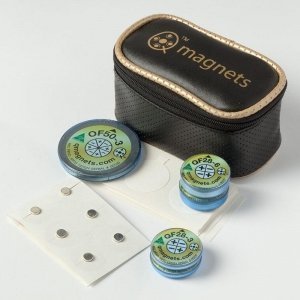
Q Magnets approaches knee pain support through a precision field-based framework rather than a generic “put a magnet anywhere” approach. The goal is to create localized static magnetic field environments that may support recovery physiology and sensitized nerve modulation when the right field, dose, and placement are used.
How Static Field Therapy Fits Into Knee Recovery Support
Static field therapy uses persistent magnetic field exposure rather than pulsed stimulation or electrical current. Q Magnets are designed as precision multipolar medical magnets, meaning their polarity arrangements are engineered to create localized field gradients rather than relying on simple north-south magnetism alone.
This matters because knee discomfort is rarely uniform. A person may feel pain along the inside joint line, outside joint line, around the kneecap, behind the knee, or in a broader pattern that changes with walking, bending, or load. A more targeted application allows the magnetic field environment to be positioned around the most relevant anatomical area.
Q Magnets should not be understood as a cure for knee conditions. A more accurate explanation is that engineered static magnetic field gradients may influence local sensory nerve behaviour, membrane excitability, and recovery-related signalling in ways that some users and practitioners find useful as part of a broader recovery plan.
The Q Magnets Framework: Field | Dose | Placement

If you’re ready for practical application, follow our Knee Pain Treatment Protocol for detailed magnet placement and product recommendations.
Field: Why Multipolar Design Matters
The field refers to the structure of the magnetic field. Q Magnets use multipolar configurations such as quadrupolar and related designs to create localized gradients. This is different from generic magnetic wraps, bracelets, or flexible magnetic sheets.
For knee pain, field geometry matters because the knee has multiple potential target zones. A field applied too broadly, too weakly, or too far from the relevant tissue may not create a meaningful exposure where it is needed.
Dose: Matching Magnet Selection to the Knee
Dose is not just magnet strength. It includes magnet size, field characteristics, exposure time, tissue depth, and consistency of use.
For mild or moderate knee discomfort, smaller Q Magnets may be appropriate around the joint lines. For more widespread or intense discomfort, a larger field area may be needed. This is why knee protocols often progress from a simple two-magnet approach to a broader four-magnet arrangement.
Placement: The Most Overlooked Variable
Placement is often the difference between a thoughtful application and a random one. With knee pain, Q Magnets are commonly positioned near the medial and lateral tibiofemoral joint lines the grooves on either side of the kneecap that can often be felt while gently bending and straightening the knee.
For broader knee discomfort, additional placement above and below the kneecap may help create a diamond-shaped field arrangement around the joint capsule.
David Knox is from Brisbane and shares how Q magnets have helped him to put knee replacement surgery on the back burner.
Customer Testimonials

Mild to Moderate Knee Pain: A Local Joint Line Strategy
For simple knee pain, the most direct starting point is often the joint line on either side of the kneecap. This area is relevant because it sits close to the tibiofemoral joint spaces, where many people notice discomfort during walking, stairs, squatting, or kneeling.
A common Q Magnets approach is:
- One Q Magnet on the inside joint line
- One Q Magnet on the outside joint line
- Placement adjusted by gently bending and straightening the knee to locate the grooves beside the kneecap
This type of placement is practical, simple, and easy to monitor. Users should observe whether comfort, movement confidence, or sensitivity changes over time. Small placement adjustments may be necessary.
When a Larger Knee Field May Be Needed
Some knee discomfort feels more diffuse. Instead of one clear painful spot, the entire front of the knee may feel sensitive, stiff, or reactive. In these cases, Q Magnets may be arranged around a larger area.
A broader arrangement may include:
- One magnet on the medial joint line
- One magnet on the lateral joint line
- One magnet above the kneecap
- One magnet below the kneecap
This creates a diamond-shaped placement around the kneecap and joint capsule area. The intent is not simply to use “more magnets,” but to create a more complete field environment around the region that feels sensitized.
Paul Blackburn from Canberra shares how Q magnets have helped reduce his knee pain and delay knee replacement surgery.
A useful way to think about knee placement is “field coverage, not magnet quantity.” More magnets are not automatically better. The purpose of adding magnets is to improve the relationship between the field, the target tissue, and the pain pattern. This is why Q Magnets emphasizes Field | Dose | Placement rather than simple strength or magnet count.
Why the Lower Back May Matter in Some Knee Pain Patterns
Why the Lower Back May Matter in Some Knee Pain Patterns
What Makes Q Magnets Different From Generic Knee Magnets
Many magnetic products are marketed as simple circulation boosters or general wellness accessories. Q Magnets uses a more precise and scientifically cautious framework.
Key differences include:
- Precision multipolar medical magnet design
- Localized static magnetic field gradients
- Condition-specific placement strategies
- Field | Dose | Placement guidance
- A focus on nervous system recovery support rather than miracle claims
This distinction is especially important for knee pain because placement and anatomy matter. A generic magnetic wrap may cover the knee broadly, but broad coverage is not the same as precise exposure.
What Results Should Users Realistically Look For?
Q Magnets should be viewed as a recovery support tool, not a guaranteed treatment. Responses vary because anatomy, tissue depth, placement accuracy, sensitivity state, activity load, and consistency all matter.
Users may monitor:
- Comfort during walking
- Ease on stairs
- Night-time knee sensitivity
- Confidence bending or straightening the knee
- Ability to participate in rehabilitation or normal movement
- Whether small placement changes alter the response
A sensible trial should involve consistent placement, careful observation, and realistic expectations. If symptoms are acute, severe, traumatic, or persistent, Q Magnets should be used only as an adjunct to appropriate clinical care.
Common Mistakes When Using Magnets for Knee Pain
Common Mistakes When Using Magnets for Knee Pain
Conclusion: A More Precise Way to Think About Knee Pain Support
Magnetic therapy for knee pain becomes more credible when it moves beyond generic claims and into a structured framework. Q Magnets positions knee applications through precision multipolar medical magnets, localized static field gradients, and Field | Dose | Placement.
For mild or moderate knee discomfort, local joint line placement may be a logical starting point. For broader or more intense patterns, a larger diamond-shaped arrangement around the kneecap may provide more complete field coverage. In some cases, spinal referral patterns may also be worth considering.
The key is not simply using magnets. The key is using the right field, at the right dose, in the right place, for the right context.