As a keen birdwatcher, this topic is close to my heart.

A mixed flock of migratory waders gathered along the shoreline. Photo: A Keates
How on Earth do they find their way?
The Sun, stars, landmarks, smells and inherited navigational programs may all contribute. But Earth’s magnetic field appears to provide another important source of information.
That is remarkable because Earth’s magnetic field is extremely weak.
At the molecular level, it seems far too weak to influence the warm, wet and constantly moving chemistry of a living organism.
Yet the birds still detect it.
And the emerging explanation may have important implications for how we think about static magnetic fields, mitochondria and human physiology.
The Stars Are Still There During the Day
Consider the stars.
They do not disappear when the Sun rises. Their light continues to reach us, but sunlight scattered through the atmosphere overwhelms the much weaker signal and makes the stars invisible.
For many years, scientists viewed biological sensitivity to Earth’s magnetic field as a similar signal-to-noise problem.
Inside the body, molecules are constantly vibrating, rotating, colliding and exchanging energy. This background molecular activity is often described in relation to thermal energy, represented by the term (kBT), where (kB) is the Boltzmann constant and (T) is temperature.
The magnetic interaction between Earth’s field and an individual molecule is hundreds of thousandsor potentially millionsof times smaller than this thermal energy.
The field should seemingly be lost in the noise.
The stars analogy is not a precise physical description of what happens inside a cell. Thermal motion does not literally block magnetism in the way sunlight obscures starlight.
But it captures the central question:
How can an extremely weak signal have a measurable biological effect when it exists within so much stronger background activity?
Professor Peter Hore’s illustration captures the puzzle: a tiny magnetic influence appears incapable of moving the much larger “block” of a chemical reaction.

The Magnetic Field Does Not Need to Power the Reaction
The radical pair mechanism offers a possible answer.
The crucial idea is that a magnetic field may not need to supply the energy that drives a biochemical reaction.
The energy may already have been supplied by light, metabolism or another chemical process. The magnetic field may only need to influence which pathway the reaction takes.
Imagine a fast-moving train approaching a railway junction.
The locomotive supplies enormous energy to move the train. However, only a small force is needed to change the points and redirect it onto a different track.
The small force does not power the train.
It changes its destination.
A weak magnetic field may sometimes play a similar role in chemistry. It may not push molecules uphill against thermal energy. Instead, it may slightly alter the probability that an already energised reaction proceeds towards one product rather than another.
That is how a field much weaker than (kBT) can still matter.
What Is a Radical Pair?
A radical is a molecule with an unpaired electron.
During certain reactions, two radicals may be created together. The unpaired electrons retain a relationship with one another and form what physicists and chemists call a radical pair.
These paired electrons can occupy two broad configurations:
- a singlet state
- a triplet state
The radical pair may move back and forth between these states for a tiny fraction of a second.
Why does this matter?
Because the singlet and triplet states may lead to different chemical products.
Nearby atomic nuclei, the structure of the surrounding protein and an external magnetic field can all influence how the radical pair moves between the two states. The field may therefore alter the proportions of the products formed.
This is established spin chemistry, and it provides useful context for the broader evidence for magnetic field therapy. Magnetic fields have been shown to influence the rates and product yields of suitable radical reactions under controlled conditions.
The unresolved question is how widely living organisms use this sensitivity.
How Might a Bird Detect Earth’s Magnetic Field?
One leading explanation involves a protein called cryptochrome, which is found in the avian retina.
When cryptochrome absorbs light, an electron can move through a chain of amino acids within the protein. This creates a sequence of flavin–tryptophan radical pairs.
The orientation of Earth’s magnetic field relative to the protein may then slightly alter the singlet–triplet dynamics of those radical pairs. That could change the chemical signalling produced by cryptochrome.
If cryptochrome molecules are arranged in different orientations across the retina, the bird may receive a pattern that varies according to its direction relative to Earth’s field.
The bird may not experience this as a compass needle pointing north. Magnetic direction could instead appear as a faint visual pattern, shading or change in contrast superimposed on what it sees.
In 2021, researchers showed that cryptochrome 4 from the migratory European robin was magnetically sensitive in laboratory experiments. It was more sensitive than equivalent proteins from non-migratory chickens and pigeons, and the researchers identified four successive flavin–tryptophan radical pairs that contributed to the effect. (Nature)
This does not prove that cryptochrome 4 is the bird’s complete magnetic compass. The precise receptor, signalling pathway and relationship between magnetic compass and magnetic map senses are still being investigated.
But it gives the radical pair hypothesis a credible molecular foundation.
Watch Professor Peter Hore Explain the Radical Pair Mechanism
From the Bird’s Eye to the Human Mitochondrion
Bird navigation is fascinating, but what could it have to do with human physiology?
The connection may lie in the fact that radical reactions are not unique to cryptochrome.
They occur throughout biology, particularly during electron-transfer and oxidation-reduction reactions.
This brings us to the mitochondria.
Mitochondria are commonly described as the powerhouses of the cell. They use a sequence of proteins called the electron transport chain to transfer electrons, establish a proton gradient and support the production of ATP.
ATP is the chemical energy currency used for muscle contraction, nerve activity, repair, transport across cell membranes and many other essential processes.
Several components of the mitochondrial system contain flavins, iron–sulfur clusters and other molecules involved in electron transfer. These are precisely the types of chemical environments in which short-lived radical intermediates may form.
That does not prove that mitochondria are magnetoreceptors.
But it makes them an understandable and scientifically plausible place to investigate.
Mitochondrial Respiration Responded Within a Narrow Field Range
A particularly relevant study was published in 2025.
Researchers exposed mitochondria isolated from adult rat hearts to static magnetic fields ranging from approximately 0.27 to 1.9 millitesla.
They observed a bell-shaped response.
Within a particular field range, maximal mitochondrial respiration increased by up to 40 per cent. The activities of mitochondrial complexes II, III and V, as well as citrate synthase, also showed bell-shaped responses. Complex I changed very little.
Interestingly, mitochondrial reactive oxygen species showed an inverted pattern, decreasing within the field range associated with increased respiration.
The researchers proposed that radical-pair reactions in cytochromes, catalytic centres and iron–sulfur clusters could help explain the findings. However, the work involved isolated rat-heart mitochondria, not people receiving magnetic therapy, and the proposed radical-pair mechanism has not yet been directly demonstrated within those enzymes. (ScienceDirect)
Even with those limitations, the study is important.
It suggests that biological magnetic-field responses may not follow a simple rule in which a stronger field always produces a larger effect.
Instead, there may be a window of response.
Below the window, little may happen. Within it, a measurable effect may appear. Above it, the response may level off, reverse or disappear.
Why Reactive Oxygen Species Keep Appearing
Reactive oxygen species, or ROS, are often described only as harmful molecules associated with oxidative stress.
That is incomplete.
In excessive concentrations, ROS can damage proteins, membranes and DNA. But in controlled amounts, molecules such as hydrogen peroxide and superoxide also act as biological messengers.
They can influence:
- cellular repair pathways
- inflammatory signalling
- gene expression
- mitochondrial adaptation
- calcium regulation
- responses to stress
Both the mitochondrial electron transport chain and NADPH oxidase enzymes are important sources of cellular ROS.
Flavin–superoxide radical pairs have therefore been proposed as possible biological magnetic sensors. A magnetic field might slightly change whether a reaction produces one form of ROS, another product or a different overall yield.
A 2020 cell-culture study found that reducing the ambient magnetic field to below 200 nanotesla altered ROS-responsive gene expression in human HEK293 cells. The authors proposed that radical-pair chemistry could explain the response.
However, the cells did not respond progressively as field strength increased. Responses at 0.5 and 2 millitesla were not significantly different from those under the normal geomagnetic field of approximately 40 microtesla.
Once again, the result was more consistent with a response window or plateau than with the assumption that “more magnetic field must produce more effect”.
The Important Superoxide Problem
Other Plausible and Speculative Possibilities
Mitochondria and ROS are not the only areas being explored.
Magnesium, ATP and NMDA Receptors
Magnesium participates in a vast number of biological reactions, including reactions involving ATP.
Studies using different magnesium isotopes have reported effects that appear to depend on nuclear spin rather than simply on atomic mass. This is interesting because nuclear-spin-dependent isotope effects are difficult to explain through a conventional mechanical mechanism.
A 2024 theoretical study proposed that magnesium–oxyradical pairs might help explain reported static magnetic-field effects on NMDA receptor activity, calcium entry and receptor-related gene expression.
The model is intriguing, particularly because NMDA receptors are central to neuronal signalling and plasticity. However, the proposed magnesium radical has not been directly identified in the biological system studied. The model therefore remains a hypothesis rather than a demonstrated mechanism.
Microtubules and Cellular Structure
Tryptophan–superoxide radical pairs have been proposed as one explanation for observations that very low magnetic environments may affect microtubule assembly.
Microtubules help maintain cell structure, transport materials and organise cell division.
Again, the modelling is interesting, but the precise radical pair has not been isolated and confirmed in this context.
Circadian Rhythms and Neurogenesis
Radical-pair models have also been developed for magnetic-field effects on circadian rhythms and hippocampal neurogenesis.
Many of these models connect the magnetic response to changes in ROS signalling.
The recurring involvement of redox chemistry is noteworthy, but it is not proof that one universal radical-pair mechanism explains every reported biological magnetic-field effect. The wider review literature explicitly describes many of these extensions as proposals requiring further testing.
Could Thermal Noise Sometimes Help Rather Than Hinder?
The warm and noisy environment of a cell remains one of the strongest objections to delicate quantum biological mechanisms.
Radical pairs must generally retain their spin relationship long enough for the magnetic field to influence the reaction. Molecular movement and interactions with the surrounding environment can destroy this coherence.
However, recent theoretical work suggests the story may be more complicated.
A 2024 study found that certain types of spin decoherence might, under particular conditions, enhance rather than simply destroy the directional response of a radical-pair compass.
The model suggested that fast singlet–triplet dephasing could produce a slower, direction-dependent change in the populations of the radical-pair states.
This is counterintuitive. Noise is normally expected to erase the magnetic effect, yet certain forms of environmental interaction may help translate it into a measurable chemical outcome.
It remains theoretical, but it shows how much there is still to learn about radical pairs in real biological environments.
What Might Field Gradients Add?
Q Magnets are designed differently from Earth’s uniform magnetic field.
They use multipolar configurations to create localised static magnetic fields with steep spatial gradients. Field strength and direction change over relatively short distances.
Could that influence radical-pair chemistry?
Possiblybut this connection must be framed carefully.
The radical pair responds primarily to the local magnetic environment at the molecule. A macroscopic field gradient should not automatically be assumed to create a meaningful gradient across the tiny distance separating two electrons in a radical pair.
That would be an unsupported conclusion.
However, gradients might still matter at a larger biological scale.
A gradient creates a range of field strengths and orientations across nearby tissue. If a radical-pair response is bell-shaped, saturating or otherwise non-linear, different cells and tissue depths may occupy different positions within that response curve.
One region may receive a field within a potentially responsive window, while another may receive a field above or below it.
Gradients may also be biologically relevant through mechanisms other than radical-pair chemistry, including forces on magnetically susceptible structures or effects related to membrane and neuronal behaviour.
The most responsible conclusion is therefore not that gradients “activate” radical pairs.
It is that field geometry may shape the distribution of local magnetic exposure, and that this deserves direct experimental investigation.
What Does This Mean for Q Magnets?
There is currently no direct evidence that the benefits reported with Q Magnets are caused by the radical pair mechanism or by changes in mitochondrial function.
That should be stated clearly.
However, radical-pair research changes the scientific question.
The outdated question is:
Is the magnetic field powerful enough to overcome thermal energy and drive a biochemical reaction?
The better question is:
Does the tissue contain a short-lived, non-equilibrium chemical process whose reaction pathway may be influenced by the local magnetic environment?
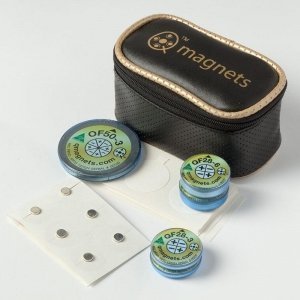
Q Magnets are precision multipolar medical magnets designed to create persistent localised static magnetic field environments. They do not continuously deliver energy into tissue in the way that electrical stimulation, PEMF, ultrasound or photobiomodulation does.
They create a wearable field environment.
Whether that environment influences radical-pair chemistry, mitochondria, neuronal excitability, membrane behaviour or some combination of mechanisms remains to be established.
This is why the Q Magnets Field | Dose | Placement framework is important.
Field includes strength, polarity configuration, direction and spatial gradient.
Dose includes exposure duration, magnet dimensions, tissue depth and cumulative use.
Placement determines which nerves, tissues and cellular environments receive the exposure.
If biological responses occur within windows rather than rising steadily with field strength, these variables may be far more important than the simple question of whether a magnet is “strong.” The distinction is explored further in does magnetic therapy work?
What We Knowand What We Do Not
What is reasonably established
Radical-pair chemistry is real. Suitable radical reactions can be influenced by weak magnetic fields. Cryptochrome 4 from a migratory bird has demonstrated magnetically sensitive chemistry in vitro. Some mitochondrial, cellular ROS and enzyme responses have also been observed under controlled magnetic-field conditions.
What is scientifically plausible
Radical-pair reactions involving flavins, superoxide, iron–sulfur clusters, cytochromes or other electron-transfer molecules may contribute to certain biological magnetic-field responses.
What remains unproven
That radical pairs are the mechanism responsible for the effects of Q Magnets; that static field therapy alters human mitochondrial function in the same manner seen in isolated rat mitochondria; or that one mechanism explains every reported magnetic-field response.
A Signal Does Not Need to Be Powerful to Be Important
The stars remain in the sky during the day, even though we cannot see them.
Their weak signal is overwhelmed, but it has not ceased to exist.
Bird magnetoreception teaches us something even more surprising. Under the right conditions, a biological system may not merely detect an extraordinarily weak signalit may use that signal to guide behaviour across an entire planet.
The radical pair mechanism provides a credible explanation for how this might occur without requiring Earth’s magnetic field to overpower thermal energy.
The field does not provide the energy that flies the bird.
It may help set the direction.
Within the human body, radical-pair reactions could potentially influence redox chemistry, mitochondrial respiration, cellular signalling or other processes that are only beginning to be understood.
There may also be mechanisms we have barely consideredor mechanisms that interact rather than working independently.
We should not fill those gaps with certainty.
But neither should we assume that a weak magnetic field is biologically irrelevant simply because its energy appears too small.
The migratory bird has already shown us that nature can make use of signals that, at first glance, should not matter at all.
References
- Rodgers, C. T. “Magnetic Field Effects in Chemical Systems.” Pure and Applied Chemistry. 2009;81:19–43. doi:10.1351/PAC-CON-08-10-18.
- Hore, P. J., and Mouritsen, H. “The Radical-Pair Mechanism of Magnetoreception.” Annual Review of Biophysics. 2016;45:299–344. doi:10.1146/annurev-biophys-032116-094545.
- Xu, J., et al. “Magnetic Sensitivity of Cryptochrome 4 from a Migratory Songbird.” Nature. 2021;594:535–540. doi:10.1038/s41586-021-03618-9.
- Zadeh-Haghighi, H., and Simon, C. “Magnetic Field Effects in Biology from the Perspective of the Radical Pair Mechanism.” Journal of the Royal Society Interface. 2022;19:20220325. doi:10.1098/rsif.2022.0325.
- Pooam, M., et al. “HEK293 Cell Response to Static Magnetic Fields via the Radical Pair Mechanism May Explain Therapeutic Effects of Pulsed Electromagnetic Fields.” PLOS ONE. 2020;15:e0243038. doi:10.1371/journal.pone.0243038.
- Beutner, G., et al. “Low Magnetic Fields Stimulate Cardiac Mitochondrial Bioenergetics with a Bell-Shaped Response: Possibly via a Radical Pair Mechanism.” Computational and Structural Biotechnology Journal. 2025;30:144–157. doi:10.1016/j.csbj.2025.11.055.
- Nair, P. S., Zadeh-Haghighi, H., and Simon, C. “Radical Pair Model for Magnetic Field Effects on NMDA Receptor Activity.” Scientific Reports. 2024;14:3628. doi:10.1038/s41598-024-54343-y.
- Player, T. C., and Hore, P. J. “Viability of Superoxide-Containing Radical Pairs as Magnetoreceptors.” Journal of Chemical Physics. 2019;151:225101. doi:10.1063/1.5129608.
- Luo, J. “Sensitivity Enhancement of Radical-Pair Magnetoreceptors as a Result of Spin Decoherence.” Journal of Chemical Physics. 2024;160:074306. doi:10.1063/5.0182172.
- Binhi, V. “Magnetic Effects in Biology: Crucial Role of Quantum Coherence in the Radical Pair Mechanism.” Physical Review E. 2025. doi:10.1103/n3fs-fsnv.