Why people look beyond a PEMF session
One of the practical questions around PEMF is not just what happens during a session, but what happens between sessions.
A practitioner may deliver PEMF in clinic for a defined period, or a patient may use a home PEMF unit for a set session length. Either way, the treatment window is time-bound. For some people, that is enough. For others, especially in longer-standing pain, overloaded tissues, or recurring flare patterns, the question becomes whether there is a simple way to continue a more localized input after the device is turned off.
That is where Q Magnets can be explained clearly. Not as a replacement for PEMF, and not as a bigger version of the same thing, but as a different kind of magnetic application that may be used alongside it.
How PEMF and Q Magnets differ
PEMF uses pulsed electromagnetic energy during an active treatment session. It is commonly discussed in relation to tissue repair, inflammation control, pain modulation, and recovery support. Your draft also draws on studies across chronic pain, post-surgical recovery, soft-tissue healing, osteoarthritis, fracture healing, and sports recovery.
Q Magnets, by contrast, use localized multipolar static magnetic field gradients. In your current PEMF draft, they are positioned as a way to provide a passive and more targeted magnetic input between PEMF sessions, with the emphasis on localized neuromodulation rather than on replacing the broader session-based role of PEMF.
That difference matters.

PEMF is something a practitioner or patient uses for a defined period. Q Magnets are something that may be placed over a specific area and worn passively for longer periods, including through the day or overnight, depending on the context and the user’s response. In practical terms, PEMF may provide the session, while Q Magnets may provide the carryover.
Where this combination may be most relevant
The strongest use case is not every possible condition. It is situations where the logic of combining a timed session with a localized passive input is easy to understand.
That may include chronic musculoskeletal pain, lower back pain, joint irritation, tendon and ligament overload, post-training soreness, recovery after strain, and selected post-surgical or fracture-recovery settings where the treating practitioner wants support both during formal therapy and in the time between appointments. Your current draft also includes neurological rehabilitation and sports recovery among the main application areas.
For that reason, this page should not read as “PEMF plus magnets for everything.” It should read as “here is where the combination may make practical sense.”
How Q Magnets may help PEMF practitioners
For practitioners, the biggest value is not just mechanism. It is continuity.
A PEMF practitioner already offers a structured session. Q Magnets may extend that care model by giving the patient something simple, passive, and localized to use after they leave the clinic. That can help bridge the gap between appointments without requiring extra device time, power, or another complicated protocol. Your draft already frames this as a way to strengthen the clinic’s value proposition and build a more advanced multi-modal approach to pain management and rehabilitation.
It also makes the clinical conversation easier. Instead of asking the patient to remember a long routine, the practitioner can think in terms of Field | Dose | Placement:
- Field means the type of magnetic field being applied. Q Magnets are used here because they are designed around multipolar gradients rather than a simple bipolar layout.
- Dose means matching the size and strength of the magnet to the depth and scale of the target tissue.
- Placement means positioning over the tissue, pathway, or pain focus that the practitioner is actually trying to influence. That framework is a core rule in your system and should be included wherever the page becomes practical.

How Q Magnets may help PEMF patients
For patients, the appeal is usually simpler.
They are not looking for another machine to learn. They are looking for something that may help them continue support once the PEMF session ends.
That is where Q Magnets may fit well. They do not require external power. They can be placed directly over the area of concern. They may be used to provide a passive local field while the patient goes about normal daily activity, rests, or sleeps. In your draft, this is one of the clearest distinctions between the two approaches.
The most important part for patients is that placement is not generic. A magnet placed near the actual target zone is different from a magnet placed vaguely “in the area.” That is why this page should introduce the idea that results may depend on correct placement, appropriate magnet size, tissue depth, and the kind of problem being addressed.
What the research suggests
The research base around PEMF is broad, but it is not uniform, and that should be stated plainly.
Your draft includes supportive findings in areas such as fibromyalgia, musculoskeletal chronic pain, chronic lower back pain, post-arthroscopic recovery, osteotomy and fracture healing, wound healing, and exercise recovery. At the same time, it also includes mixed or limited findings in some settings, including a diabetic neuropathic pain trial where the dosage used was not effective for pain reduction, and osteoarthritis research where benefit was not consistent across all patient groups.
That is the right tone for this page.
Rather than claiming that PEMF “works for” every problem, the better summary is that research suggests PEMF may be useful in some pain and recovery settings, but outcomes vary by condition, dose, timing, and patient context. The same caution should apply to how Q Magnets are discussed alongside it. They may be a useful complement in some cases, especially where a practitioner wants localized carryover between sessions, but they should not be described as a guaranteed extension of every PEMF result. Readers wanting a broader research overview can explore evidence for magnetic field therapy.
Why the combination may make sense clinically
The practical argument for combining PEMF and Q Magnets is not that more magnetism is always better.
It is that the two approaches may occupy different roles.
Important
PEMF may be used for a defined session aimed at broader stimulation and recovery support. Q Magnets may then be used more locally, more passively, and for longer wear, helping maintain attention on a specific tissue, trigger point, pathway, or pain focus between those sessions. That exact “session-based plus continuous localized support” logic is already present in the draft and is the strongest version of the page’s central message.
For practitioners, that can improve continuity of care.
For patients, it can make the treatment model easier to continue at home.
For both, it creates a more coherent explanation of what happens in clinic and what happens afterward.
Practical starting points
A simple way to present this is:
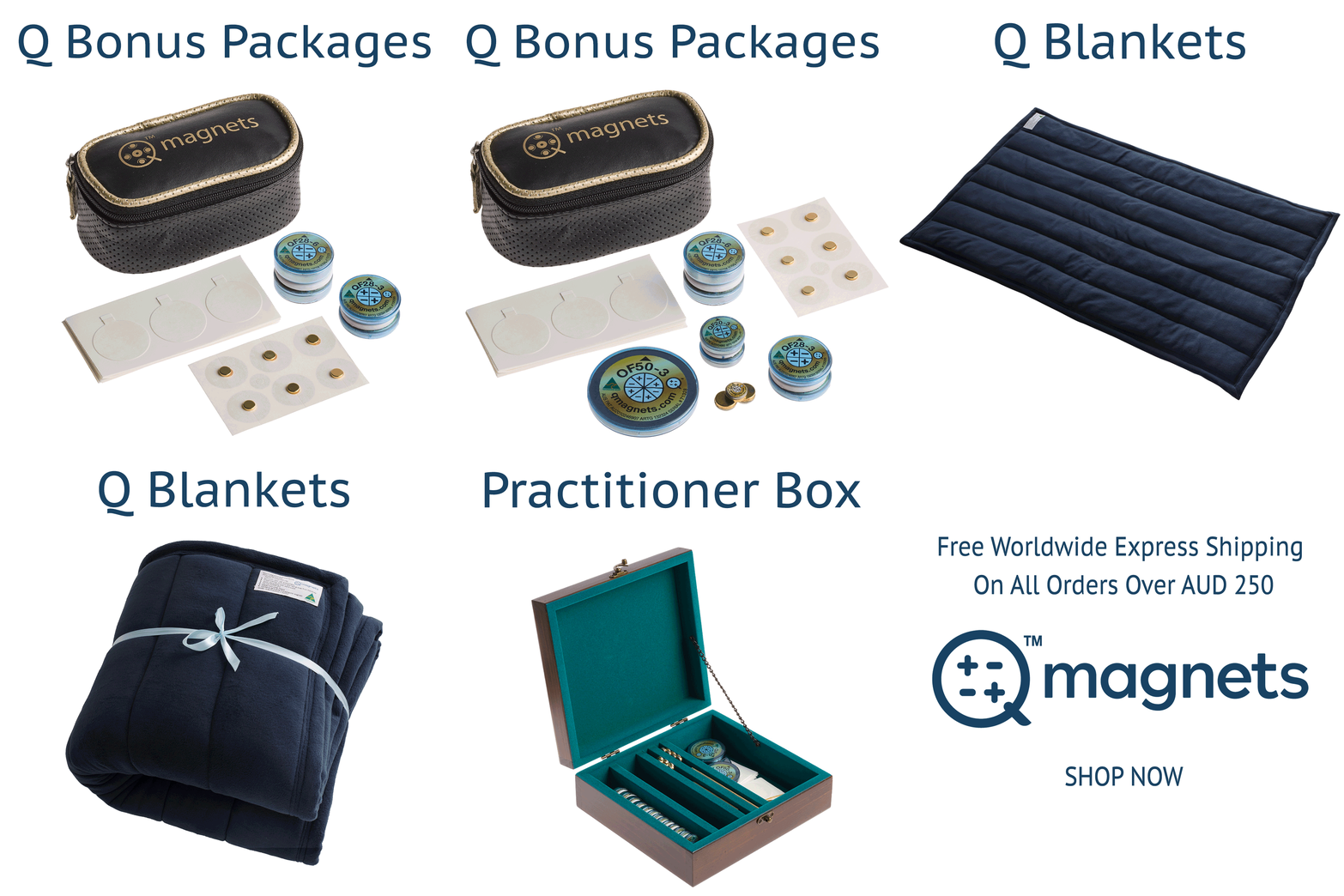
A PEMF practitioner may begin with the in-clinic session, then use Q Magnets over the most relevant local area afterward. In broad-use cases, that may mean a general-use configuration. In more targeted cases, such as lower back patterns or recovery-oriented use, your current draft already shows relevant product pathways including the General Use Set, Lower Back options, the Active Athlete package, and the Q13 Blanket.
For patients using a home PEMF unit, the logic is similar. Use PEMF as the active session. Then use Q Magnets as the simpler passive follow-through.
That is the most understandable explanation of how Q Magnets may complement PEMF users without overstating what either one does.
Limitations and expectations
This page should also say clearly that not every patient responds the same way.
Response may depend on tissue type, chronicity, irritation level, placement accuracy, magnet selection, PEMF parameters, and whether the main issue is structural recovery, pain processing, or both. Some people may feel that the extra localized input is useful. Others may notice little change. That variability is consistent with the mixed nature of the PEMF literature included in the current draft, and with your system’s Roth-proofing rules.
This combination should also sit inside normal clinical judgment. It is not a replacement for assessment, diagnosis, or appropriate contraindication screening.
Next steps
For a practitioner, the next step is usually to test the combination in a narrow group first: chronic musculoskeletal pain, sports recovery, or a recurring post-treatment flare pattern.
For a patient, the next step is to learn the basics of Field | Dose | Placement, so the magnet is chosen sensibly and positioned over the tissue that actually matters.
That is why the most natural follow-on pages from here are How Q Magnets Work, Magnetic Field Gradients, Scientific Evidence for Magnetic Field Therapy, Chronic Pain Treatment with Magnetic Therapy, and Sports Injuries. Those are already reflected in the current PEMF draft’s supporting navigation and make sense as the internal link network for this page.