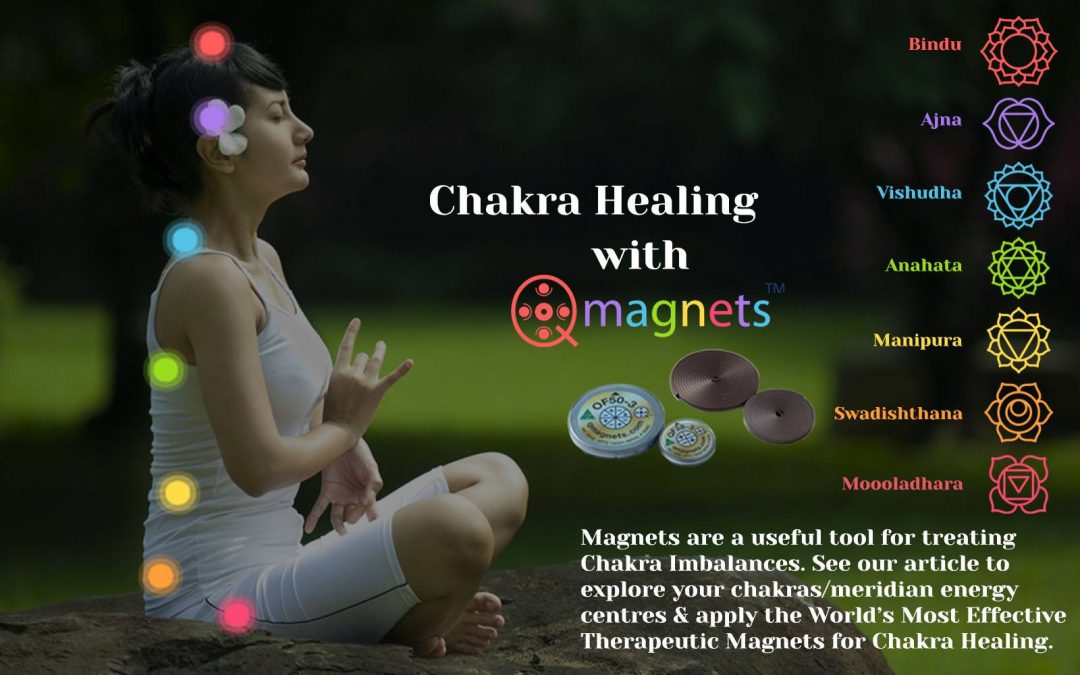
Chakra healing with magnet therapy has become an increasingly discussed approach within energy medicine, recovery optimization, and nervous system support. Q Magnets are often used by practitioners exploring chakra balancing, meridian support, and static field therapy applications designed to support recovery physiology and overall wellbeing. Magnet therapy has been promoted for chakra healing use in energy medicine. Sujok and acupressure practitioners regularly use magnets for healing chakras and enhancing the effects of chakra therapy or chakra balancing treatments. By understanding the chakra system and applying precision multipolar medical magnets thoughtfully, many people explore ways to support relaxation, recovery, meditation, and nervous system regulation. Modern positioning frameworks for Q Magnets emphasize concepts such as static field therapy, localized field gradients, nervous system modulation, and wearable recovery environments rather than simplistic magnetic therapy claims.
Understanding the Chakra System and Energy Flow
Chakras are described as energy manifestations in and around the body that can be experienced and utilized through practices such as meditation and yoga. In Chinese medicine systems, related concepts are often associated with meridians through which life energy or Qi flows. The chakras can be interpreted from physical, behavioural, emotional, and energetic perspectives. Meditation practices often focus attention on chakra locations in and around the body to support awareness, balance, and relaxation. There are seven primary chakras commonly discussed in chakra healing traditions:
Root Chakra or Mooladhara
Located near the perineum and associated with grounding, stability, and foundational energy.
Sacral Chakra or Swadisthana
Located near the base of the spinal column and associated with reproductive and urinary systems.
Solar Plexus Chakra or Manipura
Positioned behind the navel and connected with digestive processes and personal energy.
Heart Chakra or Anahata
Associated with emotional wellbeing, feelings, and cardiovascular function.
Throat Chakra or Vishuddhi
Related to communication, expression, and internal awareness.
Third Eye Chakra or Ajna
Associated with perception, sensory integration, and awareness. These chakra concepts have traditionally been explored through yoga, meditation, acupressure, and energy medicine practices.
How Q Magnets Fit Into Chakra Healing Practices
Q Magnets are positioned as precision multipolar medical magnets designed to create localized static magnetic field environments. The focus is not on continuously delivering energy, but on establishing wearable recovery environments that may support nervous system regulation and recovery physiology. Within chakra healing practices, magnets are often applied during meditation, relaxation exercises, yoga, or acupressure routines. Practitioners may place magnets over areas where discomfort, tension, imbalance, or heightened sensitivity are perceived during chakra work. The concept of Field | Dose | Placement is central to how Q Magnets are discussed.
Field
Q Magnets utilize engineered multipolar field geometries such as quadrupolar, hexapolar, and concentric ring configurations that create localized field gradients.
Dose
Dose may include exposure duration, field strength, tissue depth, and cumulative exposure time.
Placement
Placement matters because anatomy, tissue depth, and target regions vary. Small positional changes may alter field exposure and perceived effects. This systems based approach aligns with modern positioning frameworks for static field therapy and energy medicine.
Static Field Therapy and Nervous System Support
Modern recovery science increasingly focuses on nervous system regulation, sensitized nerves, recovery physiology, and membrane excitability rather than only structural explanations for discomfort. Q Magnets are discussed within this framework as wearable field based recovery technology that may support nervous system modulation and relaxation. Preferred scientific language emphasizes that static magnetic field gradients may influence biological systems through plausible mechanisms involving membrane excitability and ion regulation. The positioning framework specifically recommends avoiding exaggerated claims and instead using cautious, scientifically grounded language such as:
- “may support”
- “is proposed to”
- “may influence”
- “plausible mechanisms include”
This helps maintain credibility while discussing chakra balancing, static field therapy, and energy medicine concepts.
Many practitioners begin chakra balancing sessions by focusing on relaxation first. During meditation or Yoga Nidra practices, magnets may be placed over areas where tension, discomfort, or imbalance is noticed. Starting with lower exposure and gradually adjusting placement often aligns best with the Field | Dose | Placement framework used throughout Q Magnets education.
Using Q Magnets During Meditation and Chakra Balancing
Chakra healing practices often involve stillness, breathing exercises, meditation, or guided relaxation. Magnets may be applied while lying comfortably on a mat or during seated meditation.
Some practitioners combine Q Magnets with:
- Yoga Nidra
- acupressure
- Sujok therapy
- meridian work
- relaxation exercises
- mindfulness practices
Q Blankets, which contain multiple Q Magnets arranged in a matrix, are also used by some individuals exploring full body magnetic field exposure during relaxation and recovery sessions.

Q Blankets magnetic field therapy pain relief devices
The article emphasizes that placement may depend on where imbalance or discomfort is perceived during meditation. For example, some practitioners avoid directly overstimulating the crown or upper sensory regions and instead balance nearby areas such as the throat chakra simultaneously. This reflects the broader Q Magnets philosophy that anatomy, placement, and context influence outcomes.
Scientific Perspectives on Biofields and Chakra Concepts
The original article references Japanese scientist Dr. Hiroshi Motoyama, who developed chakra measurement devices exploring electrical activity associated with energy systems. It also references Dr. Kafatos and biofield science concepts involving electromagnetic fields generated in and around the body. These frameworks attempt to connect traditional chakra concepts with measurable physiological signals and bioelectromagnetic interactions. Q Magnets positioning frameworks align more closely with terms such as:
- static field therapy
- localized field gradients
- bioelectromagnetic recovery technology
- nervous system modulation
- wearable recovery environments
This approach intentionally avoids mystical language or exaggerated certainty while still acknowledging the growing interest in energy medicine and recovery optimization.
A Real Experience With Chakra Placement and Q Magnets
The original page includes a personal testimony from Christine, who had been dealing with a complex and persistent health condition. The testimony highlighted the placement of the OF50-3 Q Magnet over the solar plexus chakra as an important part of her broader wellness routine.
This testimonial reflects how some users integrate Q Magnets into broader meditation, recovery, and energy medicine practices.
Why Q Magnets Emphasize Precision Instead of Generic Magnetic Therapy
Q Magnets educational frameworks strongly distinguish precision multipolar medical magnets from generic wellness magnets or simplistic circulation claims. The focus is placed on:
- engineered polarity arrangements
- localized field gradients
- nervous system support
- recovery optimization
- static field therapy
- wearable recovery environments
Rather than positioning magnets as miracle cures, the frameworks encourage thoughtful application and scientifically cautious communication. This positioning aligns with broader trends in biohacking, recovery optimization, and energy medicine.