When Bruising Becomes a Setback for Active People
Bruises (haematomas) are common in sport and can limit movement, performance, and consistency. For athletes, even a single soft tissue injury can interrupt training cycles or delay return to play.
In this case, local athletes trialled magnetic therapy specifically for sports injury recovery, providing a practical context for how it may be used in real-world recovery settings.
How Magnetic Therapy Was Applied in This Case
A physiotherapy group shared a documented example of a large haematoma treated using an Octopolar Q Magnet, including before-and-after images.
The treatment was applied directly to the injured area, following a simple placement approach over the bruise. The physiotherapy team reported “huge success with these kinds of injuries,” based on their observations.
Some of the results have been posted on Facebook:
For athletes, this highlights how magnetic therapy may be incorporated alongside standard care for soft tissue injuries. For broader context, see this physiotherapist experience using magnetic therapy on a haematoma.
What This Means for Athletes Managing Bruises
This example reflects a pattern often seen in active populations:
- Injuries are treated early
- Simple applications are preferred
- Observational outcomes guide ongoing use
While results can vary, this case demonstrates how magnetic therapy has been used in a physiotherapy setting for visible bruising and soft tissue trauma. You can also explore more testimonial case studies showing how Q Magnets have been used in practical settings.
Practical Takeaways for Athletes
- Apply magnets directly over the bruised area
- Use as part of a broader soft tissue recovery approach
- Monitor visible changes (as shown in before/after examples)
- Seek guidance from a qualified practitioner where needed
Frequently Asked Questions
1. How do I apply the Q Magnet device?
Q Magnets can be applied using sports tape such as Fixomull, Hyperfix, or Cover-Roll, double-sided adhesive patches such as QFix28, QFix6 plasters for smaller models, braces, elastic supports, bandages, headbands, or the Flux Attachment Plate for suitable clothing applications.
The key is to hold the magnet securely in the correct position. Q Magnets depend on accurate placement, and even a small shift may change the field exposure at the target area.
See How To Use Q Magnets.
For longer use, many people prefer a brace, wrap, elastic support, or clothing-based attachment method rather than repeated taping. For sport or movement, make sure the magnet cannot slip, detach, or attach unexpectedly to metal equipment.
Always apply the magnet with the correct side facing the body and the orientation arrow aligned as directed.
2. How do I know which Q Magnet to use?
Choosing the right Q Magnet depends on the target area, tissue depth, magnet size, polarity pattern, and placement goal. This is the practical role of Field | Dose | Placement: The field design, exposure dose, and anatomical placement all need to work together.
Q Magnets come in different sizes, strengths, thicknesses, and polarity arrangements, including quadrupolar, hexapolar, octapolar, and other multipolar configurations. In general, smaller magnets are often used for more superficial or precise applications, while larger or thicker models may be used where deeper penetration or broader exposure is needed.
A useful way to learn the range is to review the Device Selection information and the Products page, especially the individual magnet descriptions, sizes, and penetration depth guidance. Strongest is not always best. The right magnet is the one whose field and dose best match the target tissue.
For first-time users, the Body Map on the How to Use Q Magnets page is often the easiest starting point. It provides recommended magnets, placements, and application protocols based on Q Magnets’ research, clinical experience, acupuncture principles, and physiotherapy reasoning.
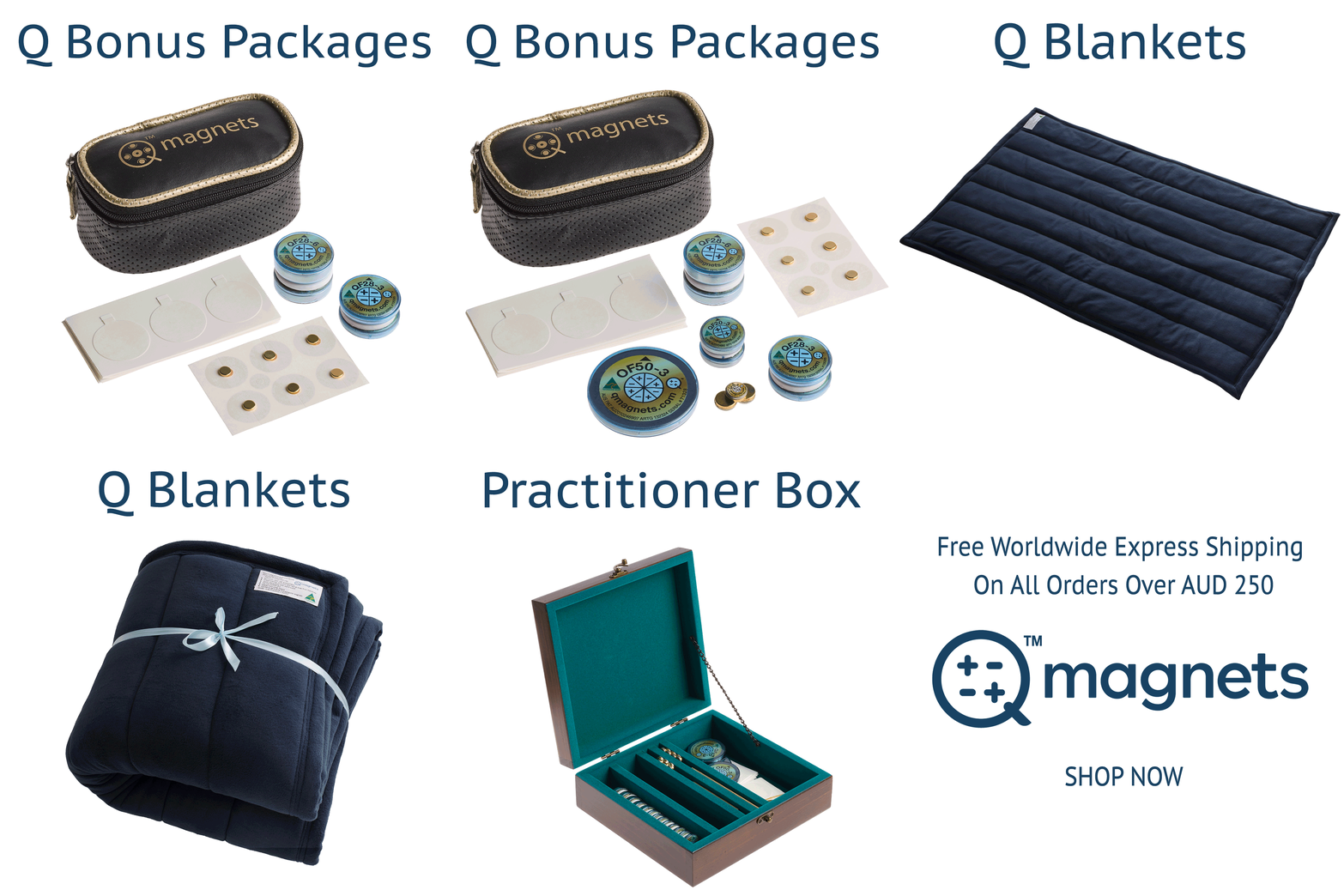
The Q Bonus Packages are also a practical first option because they include a variety of magnets suitable for small joints, large joints, and acupoint-style placements. Q Blankets may be a good choice for those looking for a comfortable sleep-time or rest-time static magnetic field environment, either as a throw-over blanket or used like a magnetic mattress pad.
3. Since placement of Q Magnets is critical, how does one find the specific placement?
The simplest starting point is to place the Q Magnet over the area of tenderness. This may be suitable for local pain patterns such as a tender tendon, joint, muscle area, or minor localized injury.
However, placement is not always obvious. Pain may be referred from another area, influenced by nerve pathways, or related to spinal segments, acupressure points, or sensitized neural structures. In these cases, multiple Q Magnets may be used along relevant nerve pathways or related anatomical regions.
This is where Field | Dose | Placement becomes practical. The field must be appropriate for the target, the magnet size and exposure must match the depth and tissue, and the placement must be accurate enough to expose the intended area to the field gradient.
For example, a local sting or tennis elbow tenderness may respond best to direct placement over tender spots. A radiating nerve pattern may require placement closer to the relevant spinal level or nerve pathway. Acupressure-style placements may also be used in some protocols.
For most users, the Body Map is the best starting point because it gives recommended placements and magnet combinations. More complex pain syndromes may require guidance from a practitioner with knowledge of anatomy, neurology, physiotherapy, or acupuncture-style point selection.
4. Can you use Q Magnets over clothing in a treatment setting, or do they have to be directly on skin? How long is best to leave them on?
Q Magnets can be used over clothing because static magnetic fields pass through most non-metallic materials. However, distance matters.
If clothing is thin, the effect on placement may be minor. If clothing, padding, bandages, or braces create a gap of 5-10 mm or more, the field reaching the target tissue may be reduced.
For best results, keep the magnet as close to the body as practical while maintaining comfort, hygiene, and clinical convenience.
Treatment time depends on the goal, the magnet model, the tissue depth, the condition, and the person’s response.
In a clinic, Q Magnets may be applied during a session, used as part of a trial, or recommended for longer home wear.
For practitioner use, document the model, placement, duration, response, and any skin issues. This turns Q Magnets into a structured application protocol rather than a vague magnetic therapy add-on.