
Looking Beyond Surface-Level Claims
Magnetic therapy is often surrounded by simplified explanations and exaggerated claims. However, research at the cellular level provides a more meaningful way to understand how static magnetic fields may influence biological systems.
A study by Vergallo and colleagues examined how static magnetic fields interact with inflammatory processes at the cellular level. Rather than focusing on surface effects, this research explored how magnetic fields may influence fundamental biological mechanisms involved in inflammation.
This article breaks down the findings of that study and places them within a broader biological context.
- It moves the discussion beyond surface-level claims about magnetic therapy.
- It looks at how static magnetic fields may influence inflammation at the cellular level.
- It supports a more biologically grounded way to interpret magnetic field effects.
Overview of the Vergallo Study
The Vergallo study investigated how exposure to static magnetic fields affects cellular processes associated with inflammation.
Key areas of focus included:
- Cellular signalling pathways
- Inflammatory mediator activity
- Oxidative stress responses
- Changes in cell behaviour under magnetic field exposure
The study did not propose a single dominant mechanism. Instead, it suggested that static magnetic fields may influence multiple interconnected processes within the cell.
This is consistent with the way inflammation operates not as a single pathway, but as a network of interacting systems.
Key Findings and Their Meaning
Modulation of Inflammatory Signalling
The study observed that static magnetic field exposure may influence signalling pathways involved in inflammation.
This suggests that magnetic fields do not act as a direct anti-inflammatory agent in the traditional sense, but may instead:
- alter how cells respond to inflammatory stimuli
- influence the intensity or persistence of inflammatory signalling
This aligns with a broader view that biological systems are sensitive to changes in their physical environment.
Effects on Oxidative Stress
One of the notable findings relates to oxidative stress.
Inflammation is closely tied to the production of reactive oxygen species (ROS), which play a role in both signalling and cellular damage.
The study suggests that magnetic fields may influence:
- ROS generation
- oxidative balance within the cell
This provides a plausible pathway through which magnetic fields could affect inflammatory processes at a molecular level.
Cellular Behaviour and Adaptation
The study also indicates that cells may respond to magnetic field exposure by adjusting their internal behaviour.
This includes:
- changes in signalling dynamics
- altered responsiveness to external stimuli
- potential shifts in cellular equilibrium
Rather than forcing a change, the magnetic field appears to influence how the cell regulates itself.
Interpreting the Study: A Systems-Level Perspective
The Vergallo study does not support simplistic explanations of magnetic therapy.
Instead, it points toward a more nuanced model:
Static magnetic fields may influence inflammation by modifying the conditions under which cellular processes operate.
Inflammation depends on:
- ion movement across membranes
- receptor activation
- oxidative signalling
- gene expression pathways
All of these systems are sensitive to small changes in their local environment.
The study suggests that magnetic fields may act at this level not as a force, but as a modifier of biological conditions.
The key takeaway is not that magnetic fields force a single biological response, but that they may modify the local conditions under which cells regulate inflammation.
How This Connects to Broader Mechanisms
While the Vergallo study focuses on cellular observations, its findings are consistent with several broader mechanisms proposed in the literature.
These include:
- modulation of ion channel activity
- changes in membrane behaviour
- influence on oxidative stress pathways
- effects on nerve-related inflammatory signalling
For a deeper exploration of these mechanisms, see:
Why Results Depend on How the Field Is Applied
One of the key implications of this study is that not all magnetic field exposures will produce the same biological effect.
Outcomes depend on:
- field strength and gradient
- duration of exposure
- proximity to the target tissue
If these factors are not within an effective range, the field may not meaningfully influence cellular behaviour.
This helps explain why research into magnetic therapy has produced mixed results.
For a structured framework, see:
- Field strength and gradient
- Duration of exposure
- Proximity to the target tissue
Conclusion: Evidence of Subtle but Meaningful Interaction
The Vergallo study contributes to a growing body of evidence suggesting that static magnetic fields can interact with biological systems at the cellular level.
Rather than acting through a single dominant pathway, these effects appear to involve:
- modulation of signalling systems
- influence on oxidative balance
- shifts in how cells regulate inflammatory responses
These are subtle effects, but they are consistent with how biological systems operate particularly in inflamed or sensitised tissue.
Understanding these interactions provides a more grounded and scientifically coherent framework for evaluating magnetic therapy.
Further Reading
References
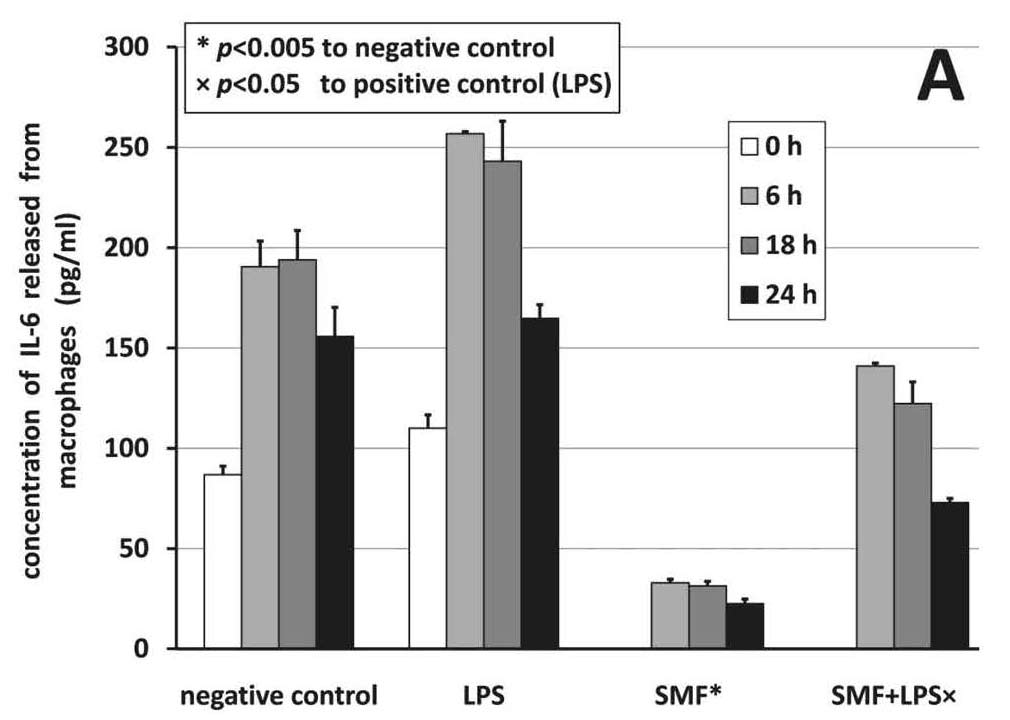
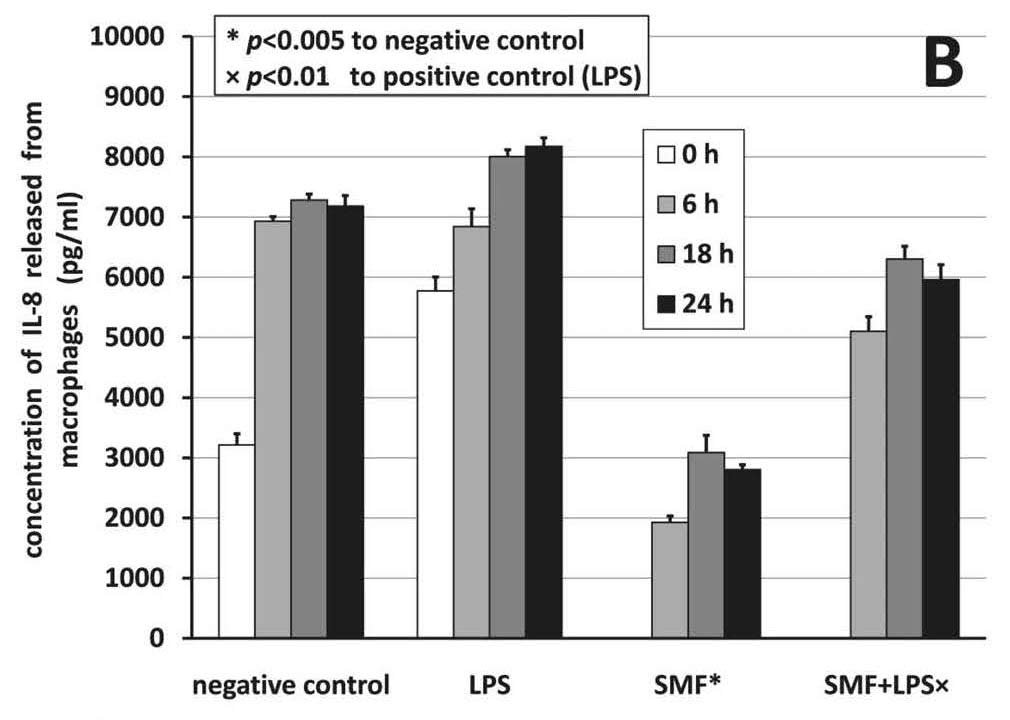
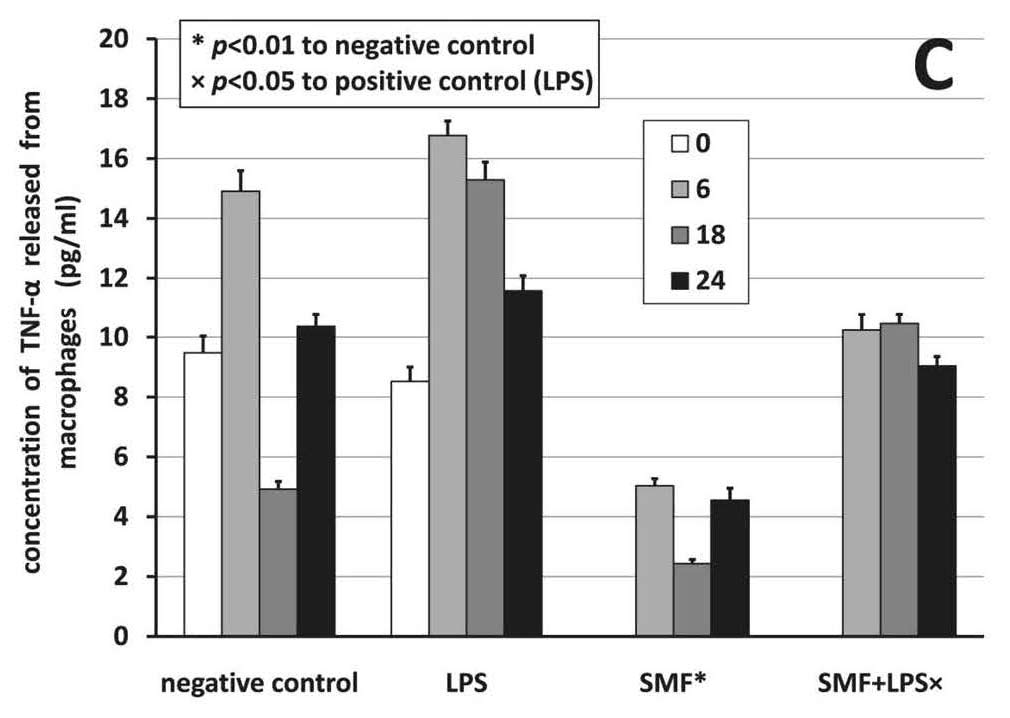
Vergallo C, et al. (2013) In Vitro Analysis of the Anti-Inflammatory Effect of Inhomogeneous Static Magnetic Field-Exposure on Human Macrophages and Lymphocytes. PLoS ONE 8(8): e72374. PMID:23991101; DOI
Chionna A, et al. (2003) Cell shape and plasma membrane alterations after static magnetic fields exposure. Eur J Histochem 47: 299–308. PMID:14706925; DOI
Lin, S.L., et al. (2010) Ultra-low dose naloxone upregulates interleukin-10 expression and suppresses neuroinflammation in morphine-tolerant rat spinal cords. Behav Brain Res 207: 30–36. PMID:19799935; DOI
Frequently Asked Questions
1. What is the mechanism of action?
The precise biological mechanism of Q Magnets has not been fully established. The current scientific positioning is that engineered multipolar static magnetic field gradients may influence membrane excitability, ion movement, and sensitized nerve signalling.
The proposed mechanism focuses on the interaction between steep localized field gradients and nerve cell behaviour. This may involve changes in sodium and calcium ion dynamics, membrane permeability, resting membrane potential, and action potential firing patterns.
Q Magnets may support reversible neuromodulation by creating localized static magnetic field environments. This is also why Field | Dose | Placement is central. The field must be appropriately engineered, the dose must match tissue depth and exposure needs, and the placement must align with the target anatomy.
2. How do Q Magnets work?
Q Magnets are designed to create localized static magnetic field gradients using multipolar magnet geometry. Unlike simple bipolar magnets, Q Magnets use alternating poles within one device to produce a more complex field pattern.
The proposed biological effect is not based simply on magnet strength. Instead, Q Magnets are positioned through Field | Dose | Placement:
- Field: multipolar geometry and localized gradients.
- Dose: magnet size, field strength, tissue depth, exposure time, and cumulative use.
- Placement: accurate positioning over or near the relevant nerve, joint, soft tissue, acupressure point, or referral pathway.
Research and theoretical work suggest that steep static magnetic field gradients may influence neuronal membrane excitability and ion channel behaviour. This may help explain why correct placement and model selection are so important.
Q Magnets should therefore be understood as precision field-based recovery tools rather than general-purpose magnets.
3. Do Q Magnets have frequency?
No. Q Magnets are static magnets, so they do not have a frequency.
Frequency requires a changing or oscillating field, such as a pulsed electromagnetic field, alternating current, or a moving magnetic source. Q Magnets do not pulse, vibrate, emit electrical current, or create an alternating field.
Their proposed effect is based on static multipolar field geometry and localized field gradients, not frequency. This makes them different from PEMF, electrical stimulation, microcurrent, or other frequency-based devices.