Living with persistent back and hip pain can gradually reshape everyday life. Simple activities become more difficult, sitting comfortably becomes challenging, and sleep, which should be restorative, can instead become one of the hardest parts of the day.For Steven from Hamden, Connecticut, this was the reality he watched his wife face for many years. After more than a decade of ongoing back and hip pain following back surgery, he decided to explore a different approach to supporting her comfort and recovery.His experience offers an insightful example of how consistency, comfort, and thoughtful application can become valuableparts of a long-term recovery routine.

“Using the magnets in the blanket, my wife has experienced a significant decrease in pain at night allowing for a more restful, comfortable night of sleep.”

– Steve Musco

Living with Long-Term Back and Hip Pain

Steven explains that his wife was 69 years old and continued to experience degeneration and persistent discomfort despite undergoing back surgery ten years earlier.

Over time, her pain contributed to a more sedentary lifestyle. Although lying down often provided the greatest relief, even resting had become inconsistent. Sitting, sleeping, and many normal daily activities were regularly interrupted by sharp back and hip pain.

Like many people living with persistent musculoskeletal pain, she was looking for greater comfort rather than a quick fix.

Trying a Different Approach

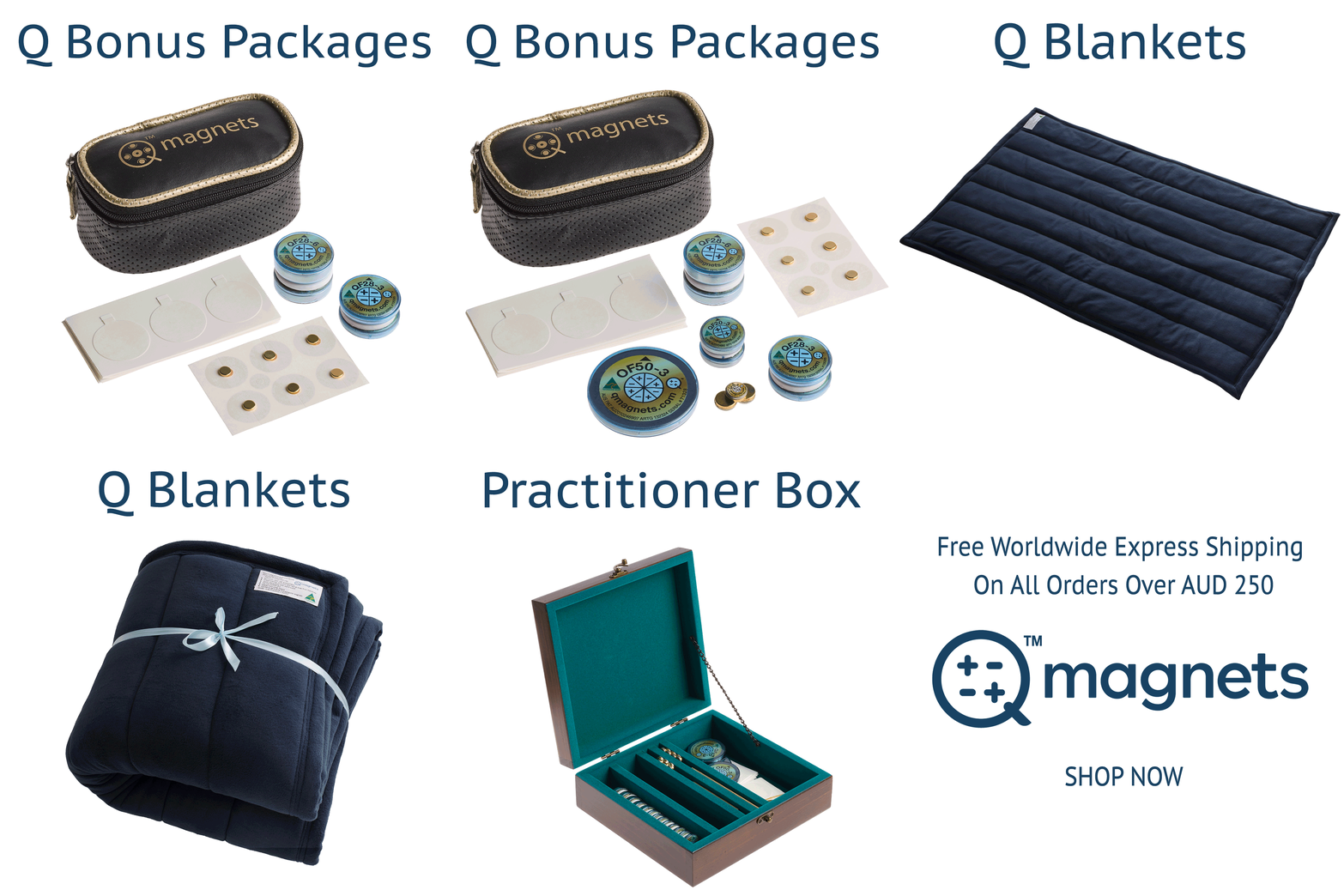
Steven decided to purchase a Q13 Q Blanket, even though his wife was initially reluctant to try it.

Rather than requiring careful daily magnet placement, the blanket simply became part of her normal routine. She used the smaller Q Blanket across her back and hip for more than eight hours each day while sleeping and while relaxing in front of the television.

Its ease of use allowed her to maintain consistent overnight and daytime exposure without disrupting everyday life.

Better Sleep Became One of the First Changes

According to Steven, one of the first noticeable improvements occurred at night.

He recalls that her discomfort, which had often been around 8 out of 10, frequently reduced to between 0 and 2 out of 10 while using the blanket. Just as importantly, the pain she described was no longer the sharp discomfort she had experienced for years.

For people living with persistent pain, improving sleep can become an important part of improving overall wellbeing. Better rest may support recovery, improve daytime energy, and make daily activities feel more manageable.

While every individual responds differently, Steven’s observations highlight how meaningful improvements are often measured through better sleep and greater day-to-day comfort rather than dramatic overnight changes.

Why Overnight Use May Matter

One of the practical advantages of a Q Blanket is that it can be used throughout the night without interrupting sleep. Within the Q Magnets educational framework, prolonged exposure forms part of the Field | Dose | Placement approach. While individual responses vary, longer periods of comfortable, passive wear may support recovery physiology and nervous system regulation as part of an overall recovery strategy.

Why Consistency Matters

A key educational principle behind Q Magnets is Field | Dose | Placement (FDP).

Rather than asking simply whether magnetic therapy works, this systems-based framework considers how application variables may influence an individual’s experience.

  • Field: Precision multipolar medical magnets create localized static magnetic field gradients that differ from simple bipole or flexible magnetic products.
  • Dose: Duration of exposure matters. A Q Blanket provides prolonged passive exposure while sleeping or resting, creating a wearable recovery environment.
  • Placement: Positioning the blanket over the affected back and hip allows localized field exposure where support is intended.

This approach recognises that anatomy, tissue depth, exposure time, and individual responses may all contribute to how static field therapy is experienced.

Understanding the Q Blanket as Wearable Recovery Technology

View Insight

A Change in Attitude

Perhaps Steven’s favourite observation had nothing to do with pain scores.

He explains that his wife, who initially did not want to use the blanket, later became interested in exploring individual Q Magnets as well.

For him, that willingness to consider additional options represented “a major improvement.”

Sometimes renewed confidence begins with one positive experience.

What This Story Can Teach Us

Testimonials are personal experiences rather than scientific proof, but they often reflect the questions many people ask when researching magnetic therapy for back and hip pain.

People commonly want to know:

  • Can I become more comfortable while sleeping?
  • Can I use a recovery product overnight?
  • Is there an option that fits naturally into my routine?
  • Can better sleep help me cope more effectively with persistent pain?

Steven’s experience speaks directly to these questions.

Rather than presenting magnetic therapy as a standalone solution, Q Magnets encourages people to understand recovery through the interaction of precision multipolar medical magnets, static field therapy, Field | Dose |Placement, and consistent application.

This educational perspective aligns with modern recovery thinking, where anatomy, exposure duration, nervous system behaviour, and practical usability may all influence an individual’s experience.

Steven’s Experience

Steven concludes his testimonial by saying that the Q Blanket significantly decreased his wife’s back and hip pain, allowing her a better and more restful quality of sleep, and that he would recommend Q Magnets to friends and family.

Every recovery journey is unique, and individual experiences vary. However, stories like Steven’s demonstrate why many people continue exploring precision multipolar medical magnets as part of a broader recovery strategy.

If you would like to learn more about static field therapy, Field | Dose | Placement, and how Q Blankets differ from generic magnetic products, these educational resources provide a deeper understanding of the principles behind this wearable recovery technology.

Read our complete guide to magnetic therapy for pain conditions

Medical magnets for low back pain