For many years, RICEM — Rest, Ice, Compression, Elevation and Magnets — was used as an early approach to managing acute soft tissue injuries. As sports medicine and rehabilitation have evolved, the focus has shifted toward protecting injured tissues while also encouraging appropriate movement, progressive loading, education and confidence throughout recovery.
Today, the internationally recognised PEACE & LOVE framework provides a practical approach to managing soft tissue injuries from the early stages through to active rehabilitation. At Q Magnets, we use a complementary adaptation called PMEACE, which adds M for Magnets to illustrate where Q Magnets may fit during the early phase of recovery.
PMEACE is not a replacement for the established PEACE & LOVE framework. Rather, it highlights how Q Magnets may be incorporated alongside accepted injury management principles, appropriate professional care and progressive rehabilitation.
Learn more about supporting sports injury recovery.
Why Has RICE Been Replaced?
The RICE method was originally developed to help manage acute injuries by limiting pain and swelling during the early stages after injury.
While many of its principles remain useful, research and clinical practice have increasingly recognised that prolonged rest and excessive efforts to suppress the body’s natural inflammatory response may not always provide the best environment for recovery.
Inflammation is a normal part of tissue repair. Rather than viewing it as something that should always be eliminated, modern rehabilitation aims to support the body’s healing processes while helping people return safely to movement as early as appropriate.
This thinking led to the development of the PEACE & LOVE framework.
What Does PEACE & LOVE Mean?
PMEACE & LOVE A Modern Approach to Sports Injury Recovery

The framework separates injury recovery into two stages.
PMEACE: The Early Phase After Injury
Protect
Reduce or modify activities that place excessive stress on the injured tissue during the first few days after injury while avoiding prolonged immobilisation wherever appropriate.
Learn more about applying Q Magnets early after injury
Magnets
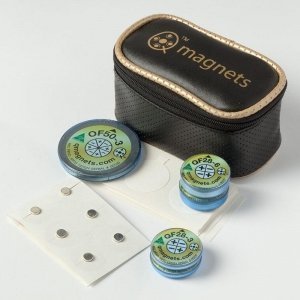
Q Magnets may be applied early after an acute injury as part of a conservative recovery strategy. Their localized static magnetic field gradients may help support temporary relief of minor aches and pains, potentially making movement and early rehabilitation more comfortable for some individuals. Q Magnets are intended to complement not replace appropriate medical assessment, progressive loading, exercise-based rehabilitation and the established PEACE & LOVE principles.
Elevate
Where appropriate, elevate the injured limb above the level of the heart to help manage early swelling.
Avoid unnecessary anti-inflammatory interventions
Current thinking suggests that inflammation is an important part of normal tissue healing. Unless clinically indicated, unnecessary suppression of this early response may not always be beneficial. Always follow advice from your healthcare professional regarding medication.
Compress
External compression may help limit excessive swelling and provide support during the early stages following injury.
Educate
Understand the nature of your injury, follow evidence-informed rehabilitation strategies and avoid unnecessary passive treatments that delay a return to normal activity. Active participation in recovery remains one of the most important factors influencing long-term outcomes.
LOVE: The Active Recovery Phase
Once the acute phase has settled, recovery shifts towards rebuilding function.

Load
Gradually reintroducing movement and appropriate loading helps tissues adapt as they recover.
Optimism
Confidence, positive expectations and active participation may influence rehabilitation outcomes and encourage better adherence to recovery programmes.
Vascularisation
Gentle cardiovascular exercise, when appropriate, supports overall health and helps restore normal movement patterns.
Exercise
Individualised rehabilitation exercises remain central to restoring strength, mobility, coordination and function.
Where Do Q Magnets Fit Within the PEACE & LOVE Framework?
Q Magnets are not a replacement for the PEACE & LOVE framework.
Instead, they may complement several stages of recovery while allowing rehabilitation to remain active and movement-focused.
Supporting Protection
Supporting Movement and Exercise
Exercise remains one of the most important components of successful rehabilitation.
Q Magnets are designed for continuous wear and may be used while people continue appropriate movement and rehabilitation activities. Unlike some recovery approaches, they are intended to support active participation rather than encourage prolonged inactivity. Their intended use is to provide temporary, localized relief of minor aches and pains and support user comfort, not to replace clinical assessment or rehabilitation.
A Modern Perspective on Recovery
Modern recovery science increasingly recognises that pain and rehabilitation involve more than injured tissues alone. Factors such as nervous system sensitivity, movement confidence and recovery physiology all contribute to the rehabilitation process.
Within this broader perspective, Q Magnets are positioned as precision multipolar medical magnets used in static field therapy. Rather than continuously delivering energy into the body, they create localized static magnetic field environments. Plausible mechanisms discussed in the scientific literature include interactions with localized static magnetic field gradients that may influence nervous system regulation and recovery physiology, although responses are expected to vary between individuals.
From Passive Treatment to Active Recovery
The evolution from RICE to PEACE & LOVE reflects a broader change in sports medicine.
The emphasis has shifted away from prolonged rest and toward informed, active rehabilitation that supports tissue recovery, movement and long-term function.
Q Magnets fit naturally within this modern philosophy by complementing, rather than replacing, evidence-based rehabilitation. Used alongside appropriate protection, progressive loading, exercise and professional guidance, they offer a conservative, non-invasive approach that may support comfort during recovery while aligning with today’s focus on active rehabilitation and recovery optimisation.