Why the 1997 New York Times Article Still Matters Today
The New York Times article highlighted an important reality that still applies today: magnetic therapy research has long existed at the intersection of scientific curiosity, skepticism, innovation, and practical clinical application.
In the 1990s, researchers exploring magnetic field therapy often faced criticism and limited funding opportunities. Despite this, several clinicians continued investigating how static magnetic fields may influence pain perception, nerve sensitivity, and recovery physiology.
What makes the article particularly important is that it documented real scientific inquiry into magnetic therapy long before the rise of modern biohacking culture, wearable recovery technology, and nervous system-focused recovery approaches.
1997 is not ancient history. At the time, researchers were already exploring questions that remain highly relevant today:
- Can magnetic fields influence pain pathways?
- Does field structure matter?
- Why do some magnetic products appear ineffective while others produce meaningful results?
- Could magnetic field gradients influence sensitized nerves?
These discussions continue today within the growing fields of bioelectromagnetics, static field therapy, and recovery optimization.
Early Research into Post-Polio Pain and Magnetic Therapy
One of the most important aspects of the New York Times article was its discussion of Dr. Vallbona’s work involving post-polio syndrome pain.
Post-polio syndrome can involve chronic pain, muscle fatigue, weakness, and nervous system sensitization long after the original viral illness. Researchers investigating magnetic therapy were interested in whether static magnetic fields may help support pain modulation and rehabilitation tolerance in these patients.
The article also referenced work involving fibromyalgia and phantom limb pain, both conditions now increasingly understood through the lens of nervous system sensitization and altered pain signaling.
Modern pain science increasingly recognizes that persistent pain is not always explained solely by tissue injury. Instead, altered membrane excitability, peripheral sensitization, and amplified nervous system signaling may contribute significantly to ongoing pain states.
This shift in understanding aligns with the modern positioning of Q Magnets as precision multipolar medical magnets designed to create localized static magnetic field environments that may support nervous system regulation and recovery physiology.
How Static Field Therapy Has Evolved Since 1997
Since the publication of the New York Times article, the field has evolved significantly.
Modern discussions around magnetic field therapy now increasingly focus on:
- localized field gradients
- field geometry
- membrane excitability
- nervous system modulation
- recovery optimization
- wearable recovery environments
Rather than relying on simplistic explanations about circulation alone, modern static field therapy frameworks increasingly explore how engineered magnetic field gradients may influence sensitized nerves and recovery physiology.
This distinction is important because not all magnets produce the same field characteristics.
Research and positioning frameworks now increasingly distinguish between generic magnetic products and precision multipolar medical magnets utilizing engineered polarity arrangements and localized field gradients.
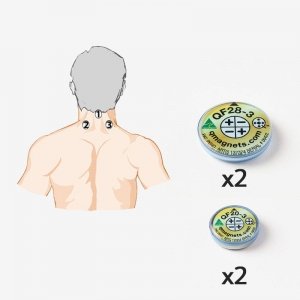
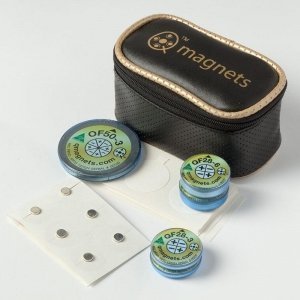
Examples of Precision Multipolar Configurations
The Shift from “Magnetic Therapy” to Precision Field-Based Recovery Technology
One of the biggest changes since 1997 has been the language surrounding magnetic field applications.
The phrase “magnetic therapy” has often been associated with weak consumer magnets, simplistic marketing claims, and low-credibility products. Modern frameworks increasingly reposition the discussion toward:
- static field therapy
- field-based recovery technology
- multipolar medical magnets
- wearable recovery environments
- nervous system modulation support
This repositioning helps align magnetic field applications with modern neurophysiology and recovery science rather than outdated wellness marketing narratives.
Modern recovery science increasingly focuses on:
- nervous system regulation
- recovery capacity
- rehabilitation tolerance
- sensitized nerve behavior
- recovery optimization
This creates a more sophisticated framework for understanding how static magnetic field environments may interact with biological systems.
Practical Takeaway: Why Magnet Design and Placement Matter
Modern static field therapy discussions increasingly emphasize that outcomes may depend on more than simply using a magnet.
Three important variables are often considered:
- Field: magnetic field geometry and localized gradients
- Dose: exposure duration and field characteristics
- Placement: anatomical positioning relative to the target tissue
This systems-based framework helps explain why some magnetic products appear ineffective while more precise applications may produce different outcomes.
The Role of Nervous System Modulation in Modern Recovery Discussions
Modern research discussions increasingly focus on how static magnetic field gradients may interact with membrane excitability and neuronal signaling.
Laboratory studies involving quadrupolar magnetic arrays have explored whether steep localized field gradients may reversibly influence sustained sensory neuron firing under experimental conditions.
Importantly, modern scientific positioning avoids exaggerated claims.
Preferred scientific language includes phrases such as:
- “may influence”
- “is proposed to”
- “plausible mechanisms include”
- “may support”
This careful approach preserves scientific credibility while acknowledging that biological systems are complex and outcomes may vary.
Why Scientific Language Matters in Magnetic Therapy Research
Q Magnets and the Continuing Development of Magnetic Field Therapy
As original innovators in multipolar medical magnet development, Q Magnets continue supporting research, education, and application development within static field therapy and recovery optimization.
Q Magnets are a patented Class I medical device in Australia for pain relief and are available over the counter.
Ongoing research and design development continue exploring:
- improved field configurations
- recovery-oriented applications
- practitioner integration
- wearable recovery environments
- user-friendly placement systems
The evolution from early magnetic therapy research in the 1990s to today’s systems-based recovery frameworks demonstrates how far the field has progressed.
What was once dismissed as fringe discussion is now increasingly explored through the lenses of bioelectromagnetics, nervous system modulation, and recovery physiology.
Why Historical Articles Like This Continue to Matter
The 1997 New York Times article remains valuable because it captured a transitional moment in the history of magnetic field therapy.
It documented:
- scientific curiosity
- practitioner experimentation
- early clinical observations
- skepticism from mainstream medicine
- the ongoing search for non-pharmaceutical recovery approaches
Today, magnetic field therapy continues evolving toward a more sophisticated understanding centered on:
- precision multipolar medical magnets
- static field therapy
- localized field gradients
- recovery optimization
- wearable recovery technology
- nervous system-focused recovery support
The article serves as a reminder that many medical ideas experience periods of skepticism before mechanisms and applications become better understood.
Frequently Asked Questions
1. What is the mechanism of action?
The precise biological mechanism of Q Magnets has not been fully established. The current scientific positioning is that engineered multipolar static magnetic field gradients may influence membrane excitability, ion movement, and sensitized nerve signalling.
The proposed mechanism focuses on the interaction between steep localized field gradients and nerve cell behaviour. This may involve changes in sodium and calcium ion dynamics, membrane permeability, resting membrane potential, and action potential firing patterns.
Q Magnets may support reversible neuromodulation by creating localized static magnetic field environments. This is also why Field | Dose | Placement is central. The field must be appropriately engineered, the dose must match tissue depth and exposure needs, and the placement must align with the target anatomy.
2. How do Q Magnets work?
Q Magnets are designed to create localized static magnetic field gradients using multipolar magnet geometry. Unlike simple bipolar magnets, Q Magnets use alternating poles within one device to produce a more complex field pattern.
The proposed biological effect is not based simply on magnet strength. Instead, Q Magnets are positioned through Field | Dose | Placement:
Field: multipolar geometry and localized gradients.
Dose: magnet size, field strength, tissue depth, exposure time, and cumulative use.
Placement: accurate positioning over or near the relevant nerve, joint, soft tissue, acupressure point, or referral pathway.
Research and theoretical work suggest that steep static magnetic field gradients may influence neuronal membrane excitability and ion channel behaviour. This may help explain why correct placement and model selection are so important.
Q Magnets should therefore be understood as precision field-based recovery tools rather than general-purpose magnets.
3. Most treatments for pain have a very high placebo effect. Could the effect of Q Magnets be a placebo?
Placebo effects can occur with many treatments, including medications, devices, manual therapies, and procedures. Pain is especially responsive to expectation, context, attention, and belief.
However, Q Magnets are not positioned only as a placebo-based intervention. The rationale for Q Magnets is based on the engineered field geometry of multipolar magnets and research suggesting that steep static magnetic field gradients may influence neuronal excitability.
A balanced answer is that placebo effects may contribute to any pain-related therapy, but they do not fully explain the technical rationale behind Q Magnets. The Q Magnets framework focuses on field geometry, tissue exposure, dose, and placement rather than belief alone.
The best practical test is consistency: correct model selection, accurate placement, repeatable use, and whether results are sustained across applications.