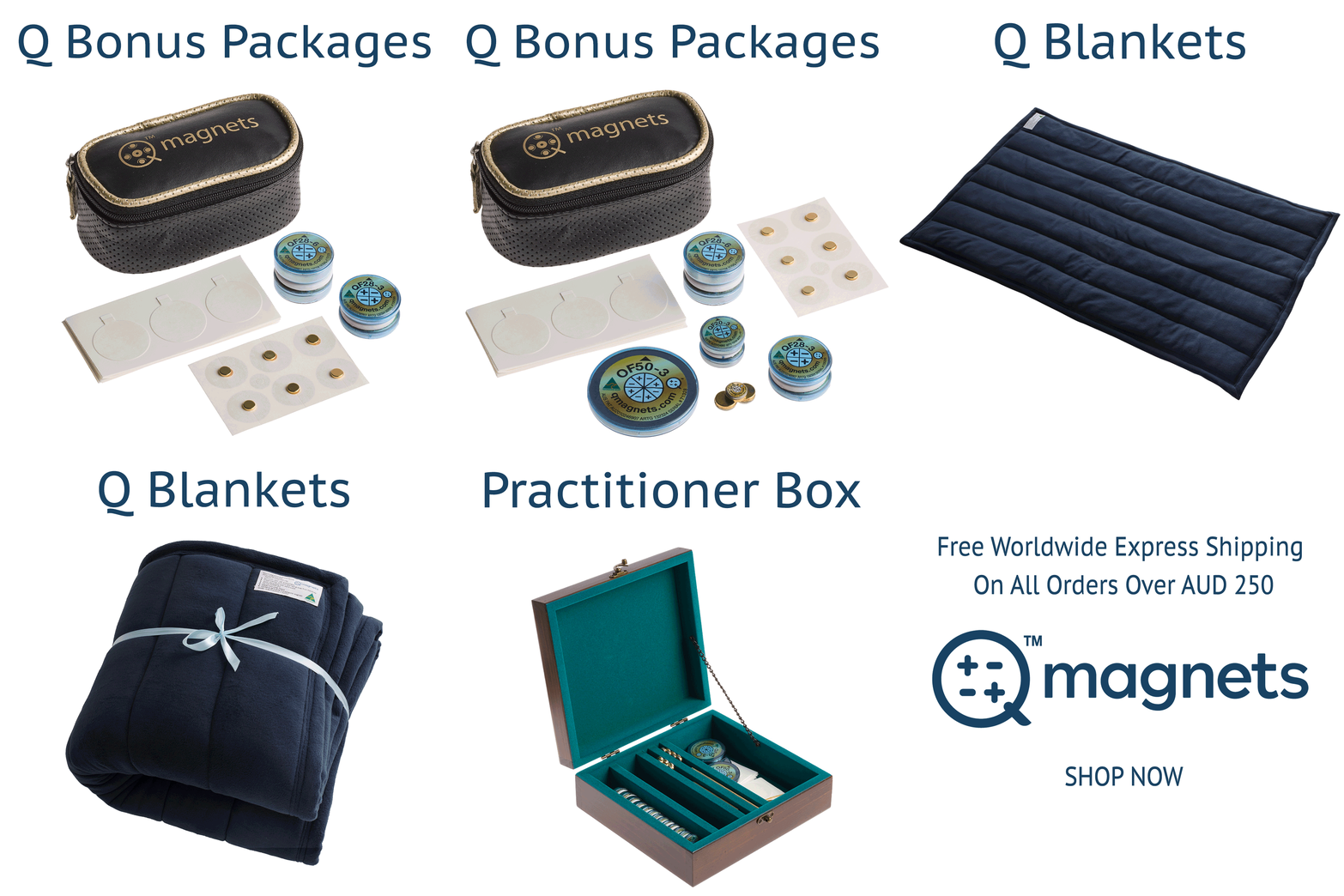
Her brief review highlights an important practitioner consideration: what can clients realistically use once they leave the treatment room? A take-home option needs to be practical, reusable and easy to incorporate into normal routines without replacing appropriate professional care.

What Makes a Good Take-Home Recovery Support Tool?
For many practitioners, the challenge is not only what happens during a treatment session. It is what happens afterward.
Clients return to work, family responsibilities, physical activity and the everyday demands that can influence recovery. A useful take-home tool should therefore fit around daily life rather than create another complicated routine.
Q Magnets are passive, non-powered multipolar magnetic devices that can be worn at home as part of a broader recovery approach. Their role is not to replace assessment, rehabilitation or medical treatment, but to provide a practical option for ongoing, localized support.
Why Consistency Matters in Static Field Therapy
One reason practitioners may value take-home tools is the opportunity for consistent use. Q Magnets create localized static magnetic field environments and can be worn for extended periods according to the Instructions for Use.
This makes them different from treatments that are available only during an appointment or require powered equipment. Users can incorporate them into normal activities at home, allowing exposure to continue between practitioner visits.
Q Magnets are precision multipolar medical magnets designed to produce localized static magnetic field gradients. Their use is best understood through the Field | Dose | Placement framework rather than the idea that simply using a stronger magnet is automatically better.
For take-home use, this framework helps explain why correct device selection and placement matter alongside consistency.
Supporting Recovery Between Appointments
A common question after treatment is simple: what can I do at home?
For suitable clients, a take-home static field therapy option can help bridge the time between appointments. Because Q Magnets are wearable and reusable, they can become part of an ongoing recovery routine without requiring a powered device or a separate treatment session.
This can also support practitioner education. Rather than treating magnetic therapy as a one-size-fits-all intervention, practitioners can explain why anatomy, field characteristics, exposure and placement all matter. More complex pain patterns or radiating symptoms may require professional guidance to identify appropriate placement.
The Value of Simplicity and Practicality
The most useful take-home solutions are often the ones people can realistically maintain.
Complex routines can be difficult to sustain. Q Magnets are designed for direct application to the body using appropriate adhesive or compatible supports, allowing them to be incorporated into everyday life with relatively little disruption.
That practicality is central to Dee Kline’s experience as a practitioner. Her review is brief, but it points to the value of having an option that clients can continue using outside the clinic as part of a broader approach to comfort and recovery.
A Practitioner Perspective on Take-Home Magnetic Therapy
Practitioner recommendations matter because they are informed by real-world use, but an individual testimonial should not be treated as proof that everyone will respond in the same way. Responses to static field therapy can vary, and factors such as anatomy, placement, tissue depth, exposure duration and the nature of the symptoms may all influence the experience.
For practitioners exploring Q Magnets, the more useful question is therefore not simply whether a magnet is strong. It is whether the field, dose and placement are appropriate for the person and the intended application.
Final Thoughts
Dee Kline’s experience highlights a practical role for Q Magnets: extending recovery support beyond the treatment room.
For practitioners seeking a reusable take-home option, Q Magnets combine precision multipolar medical magnets with a structured Field | Dose | Placement approach. They create localized static magnetic field environments that can be incorporated into daily routines while remaining adjunctive to appropriate professional care.
A simple take-home tool can be valuable when it is used thoughtfully, placed appropriately and integrated into a broader recovery plan.
Read our complete guide to magnetic therapy for pain conditions